
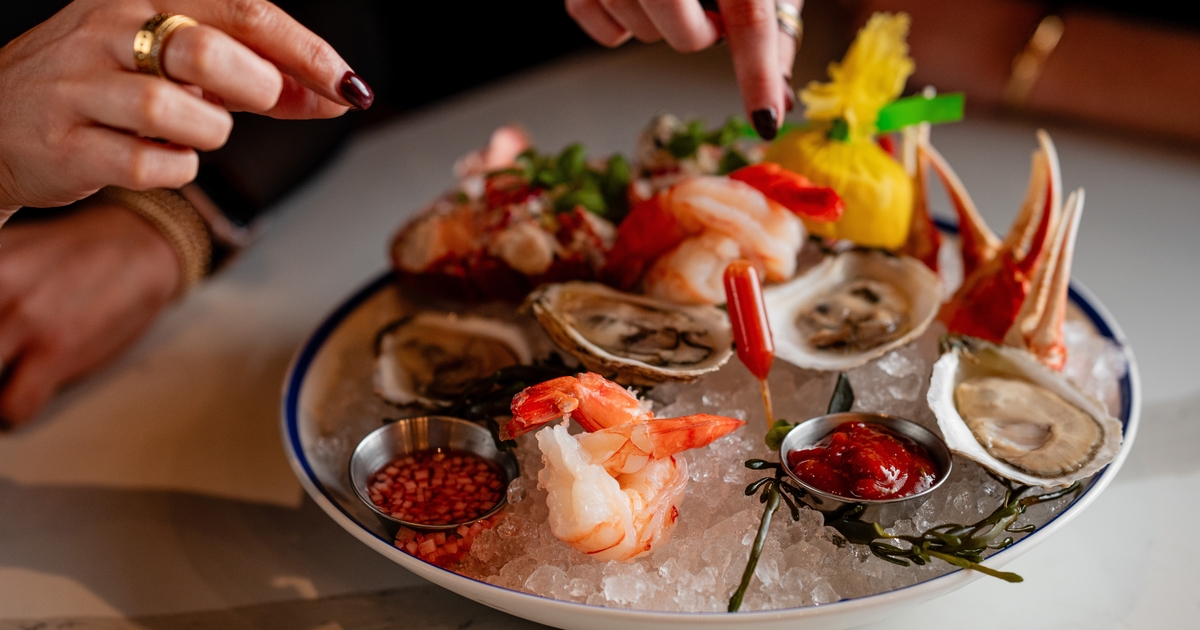
The shellfish is sustainable, high in protein, and has plenty of good stories to tell.
There are many things to like about oysters that fit nicely into current food trends.
They’re high in protein and a variety of micronutrients, they’re incredibly good for the environment, they’re an affordable luxury, and there are great stories to tell about them.
“You are getting the best possible taste of the sea,” said Bilen Gaga, partner in Selune, a natural wine and oyster bar that just opened in Brooklyn, N.Y., in June.
“At the core, fresh oysters are just a small way of feeling like you are smelling and tasting the pure essence of the ocean.
Don’t they taste like the most perfect day on the beach?
I know that’s what they evoke for me.”
They’re certainly growing in popularity:
Mentions of oysters on menus have increased by 11.9% over the past year, according to Technomic’s Ignite Menu data.
At Selune the focus is on Utah Beach oysters, named for the bay in France where they grow, which is the same Utah Beach where allied forces landed to liberate Europe during the Second World War.
Many operators focus on what’s harvested from nearby waterways.
The rise of the oyster master.
These days most oysters are cultivated.
They’re farmed in estuaries or other coastal areas, and they’re not just sustainable — they’re regenerative, cleaning up the waterways where they grow.
“They filter up to 50 gallons of water a day,” said Aaron Juvera, chef de cuisine of Southerleigh Fine Food & Brewery in San Antonio, Texas, and that state’s first certified oyster master.
“One of the farmers we work with has noted that she’s seen the water change visually, and new schools of fish have come back to their bay that they hadn’t seen,” he said.
Oyster certification is new, having just been launched by the Oyster Master Guild in 2023.
Although there are four levels of certification on paper, there were only two levels available when Juvera earned his certification and he achieved the first level.
“They went deep into everything from cultivation history, the species, anatomy, techniques for shucking, impact on the environment.
... There are quite a few topics to cover.”
And the Texas oyster industry is new, too.
It takes 18-36 months for oysters to reach market size, around three inches, but Juvera already was using oysters from three farms last year — Copano Creams, Blackjack Point, and Big Tree oysters.
“They’re bright, nice, clean, almost a sea bean taste — sort of vegetal,” he said.
And they’re also different from typical Gulf of Mexico oysters, which tend to be flabbier and more suited to cooking rather than eating raw as Juvera is serving them.
And Blackjack Points, from the south side of Aransas Bay, “have a lot more flowing water and are bigger, with a sweeter finish.”
Big Trees are also on the menu at Le Calamar, which opened in Austin in May.
He has prepared them in a variety of ways, and was particularly pleased with some that he lightly poached in chicken fat, chilled, and then reheated in vermouth cream finished with tarragon oil.
“It ends up tasting like the best kosher dill pickle brine you’ve ever had.”
There are five different species of oyster that are widely consumed in the U.S., and four are found on the Pacific Coast.
All of them have great nutritional qualities, including high levels of zinc, Vitamin B12, iron, selenium, and Omega-3 fatty acids.
The appeal of merroir.
Even though oysters from Maine to the Caribbean are the same species, they can taste radically different from each other, and the term for that has come to be known as merroir — a play on terroir.
Learning that merroir can be a big part of the fun of oyster selection, said Kyle Biddy.
“As a chef, I love learning about these specific coastal areas where oysters are grown.
It gives me something that’s ever-changing for our staff to learn about as we bring in different oysters at different times of the year.”
He mostly uses East Coast oysters from North Carolina to Maine, but also uses Murder Points from Bayou La Batre in Alabama.
“They’re actually really good!” he said.
Back in New York City, chef Marc Forgione uses oysters from Widow’s Hole, from the north fork of Long Island, for a dish that reflects the restaurant’s approach to wood-fired cooking.
“We then treat that like a compound butter and mix with allium, herbs, and red wine,” he said.
The savory and fatty marrow ... and spice from the nduja are perfect compliments to the briny Widow’s Hole oyster.
“They create a perfect surf and turf moment.”
Boston’s happy hour substitute.
Boston has a unique relationship with oysters.
Not only are they prized by locals, but many restaurants offer $1 oysters as a substitute for happy hour.
Discounting drinks at specific times of day is illegal in Massachusetts, so operators discount oysters instead.
Daniel Kenney, executive chef of the Lenox Hotel in Boston, also makes his own hot sauce.
He also roasts them on a bed of rock salt — a classic method that keeps the shellfish so their liquid doesn’t leak out.
He tops them with a variety of ingredients and focuses on relationships with local oyster farmers to ensure freshness.