
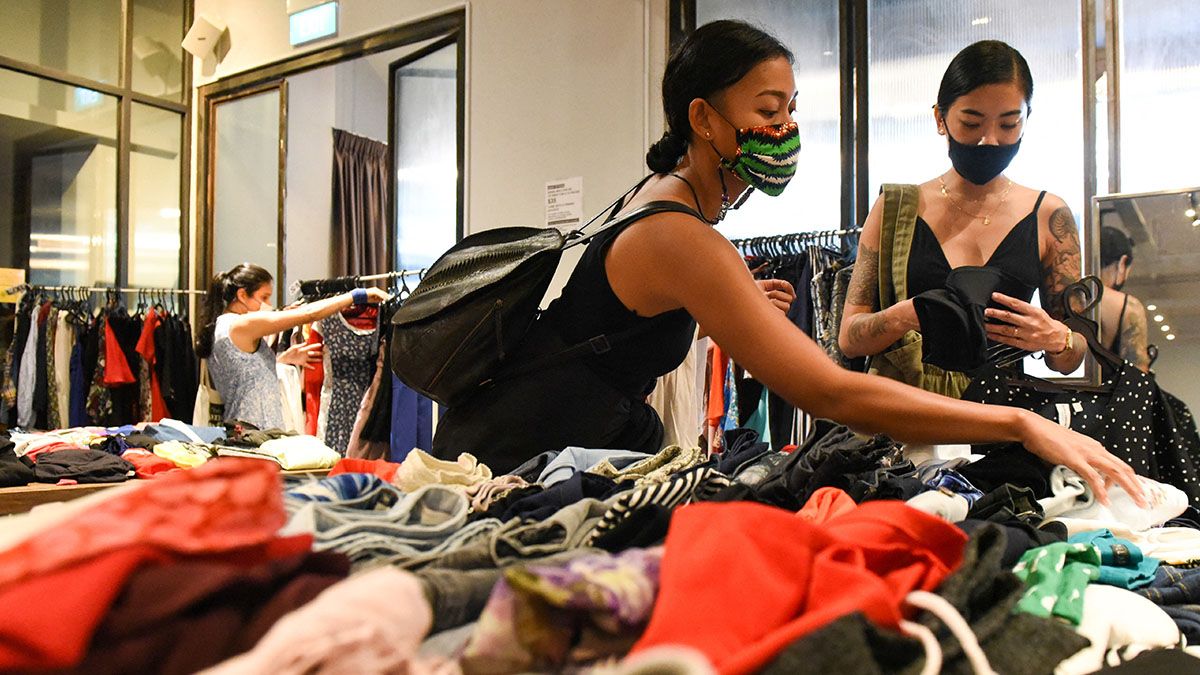
In a hyper-consumerist era of social media, flooded with product reviews and shopping haul videos, a backlash to overconsumption is brewing. More consumers are joining pledges such as the “Rule of 5” (where you limit fashion purchases to five items a year), conducting wardrobe inventories, or challenging themselves to buy nothing new in 2024 and shop their closets instead. “TikTok made me buy it” has become a common refrain for users influenced to make purchases from or on the app. Now, the hashtag #deinfluencing has been used more than 26,000 times, full of content creators working to undo some of that impulsive behaviour. “What is good for the planet is also good for our mental health and our well-being. If we buy less, but we buy more mindfully, we are happier. And the planet is going to thank us because we don’t need that much stuff,” says Katia Dayan Vladimirova, senior lecturer at the University of Geneva and founder of the Sustainable Fashion Consumption research network. She and three colleagues launched a year-long experiment for 2024, the Joyful Closet Consumption Challenge, to help participants “rethink consumption patterns” and simultaneously study what challenges people face as part of that work, what motivates them to keep going, and what benefits they see if and when they succeed in reducing their wardrobe size and their acquisition of new clothes. As public concerns around waste and climate change grow louder, the mood is shifting at the highest levels as well. At the World Economic Forum in Davos last week, calls for capitalism to evolve, or risk failing, grew louder. The head of the World Trade Organization, Dr Ngozi Okonjo-Iweala, called on world leaders to “rethink old growth models”. Where does that leave brands, whose sustainability efforts have largely focused on business practices but not transforming the business model itself? For a growing number of academics, economists, advocates, small brands, and even sustainability professionals within larger brands, the writing is on the wall: brands need to adapt. Failing to do so could be a threat to their future profitability, which today depends directly on increasing product sales every year.
Source