
Rejected by investors, built to £6.5m: what a TikTok haircare brand teaches Moldovan founders about the new gatekeepers
When institutional money says no, a social audience can say yes louder — and this story shows the math.
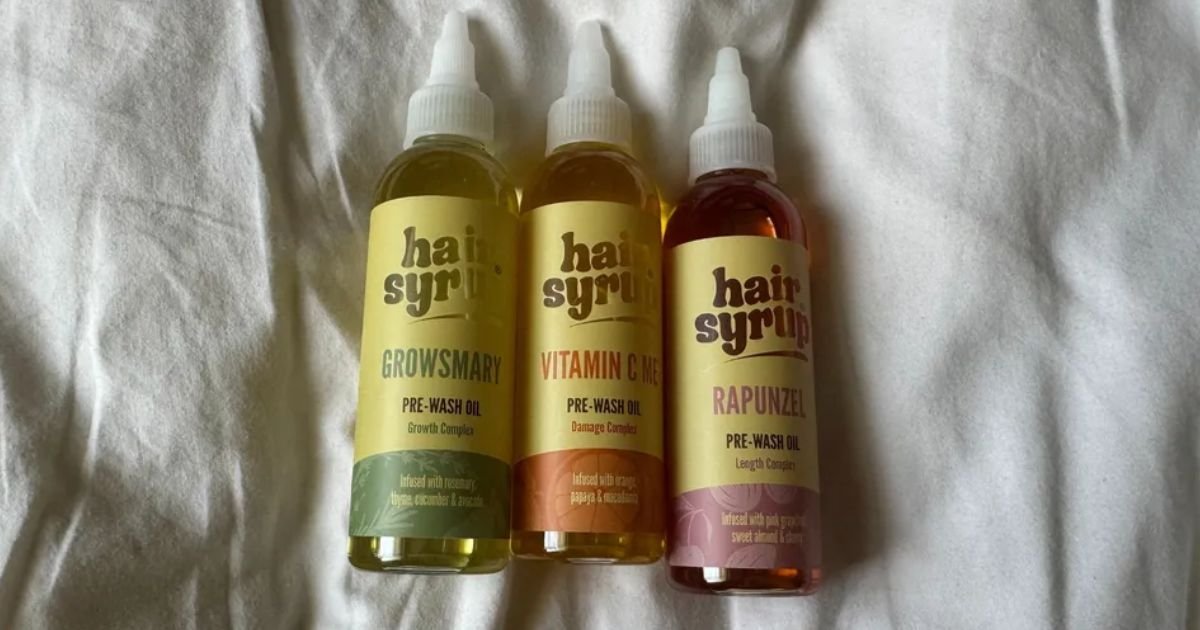
A panel of professional investors passed on Hair Syrup. The brand's founder, Lucie Macleod, walked out of Dragons' Den without a deal. Six months later, she had 400,000 TikTok followers, 325,000 products sold on the platform alone, and a projected turnover of £6.5 million for 2026. One product line recorded 700% sales growth through TikTok Shop in the span of a few years. The brand is now preparing expansion into the US and Australian markets — without the investors who said no.
The product itself — pre-wash hair oils rooted in a 5,000-year-old Ayurvedic tradition — is not revolutionary. What is remarkable is the distribution model. Macleod built the brand from her family home while at university, sold first on Etsy, then migrated to social commerce, and let the community become the sales force. There was no retail partnership at launch, no venture capital, no traditional media budget. There was consistency, product transparency, and a platform that rewards both.
But this story is not about TikTok. It is about what happens when founders stop waiting for permission from gatekeepers — and start building trust directly with the people who will actually buy the product.
Private label cosmetics and personal care producers in Moldova operate in a market where shelf space in local retail chains is limited, import competition is heavy, and advertising budgets are structurally smaller than those of international players. The conditions that pushed Macleod toward social commerce are not foreign to this market — they are the daily reality of building a consumer brand here. What is still underused in Moldova is the model she proved: that a founder's credibility, demonstrated consistently over time through short-form video content, can substitute for distribution infrastructure that most small producers cannot afford anyway. Word-of-mouth has always driven purchase decisions in this market. Social commerce is word-of-mouth with scale.
For anyone building a consumer product brand in Moldova right now, three questions are worth sitting with:
Is your product story being told by you, or is it not being told at all? Macleod's founder narrative — a university student solving her own hair problem — became the brand's most durable asset. Authenticity is not a marketing strategy here; it is the product.
Are you treating rejection from traditional channels as a verdict, or as a redirect? Dragons' Den said no. The market said yes. The distinction between institutional validation and actual customer demand is one that founders in a small, capital-constrained market cannot afford to conflate.
Do you know which platform your customer actually uses to make buying decisions? In Moldova, the answer varies sharply by age group, product category, and geography. The platform is not the strategy — knowing where trust is built in your specific segment is.
If your product is good and your story is real, who exactly are you waiting for to tell people about it?
SourceSee also
100% Open Rate, Zero Algorithm: Why Paper Coupons Are Outperforming Digital Ads — and What Moldova's Retail Sector Can Learn
When digital marketing costs explode, the oldest tool in the playbook becomes the most sophisticated one.
PART 1 — THE GLOBAL STORY
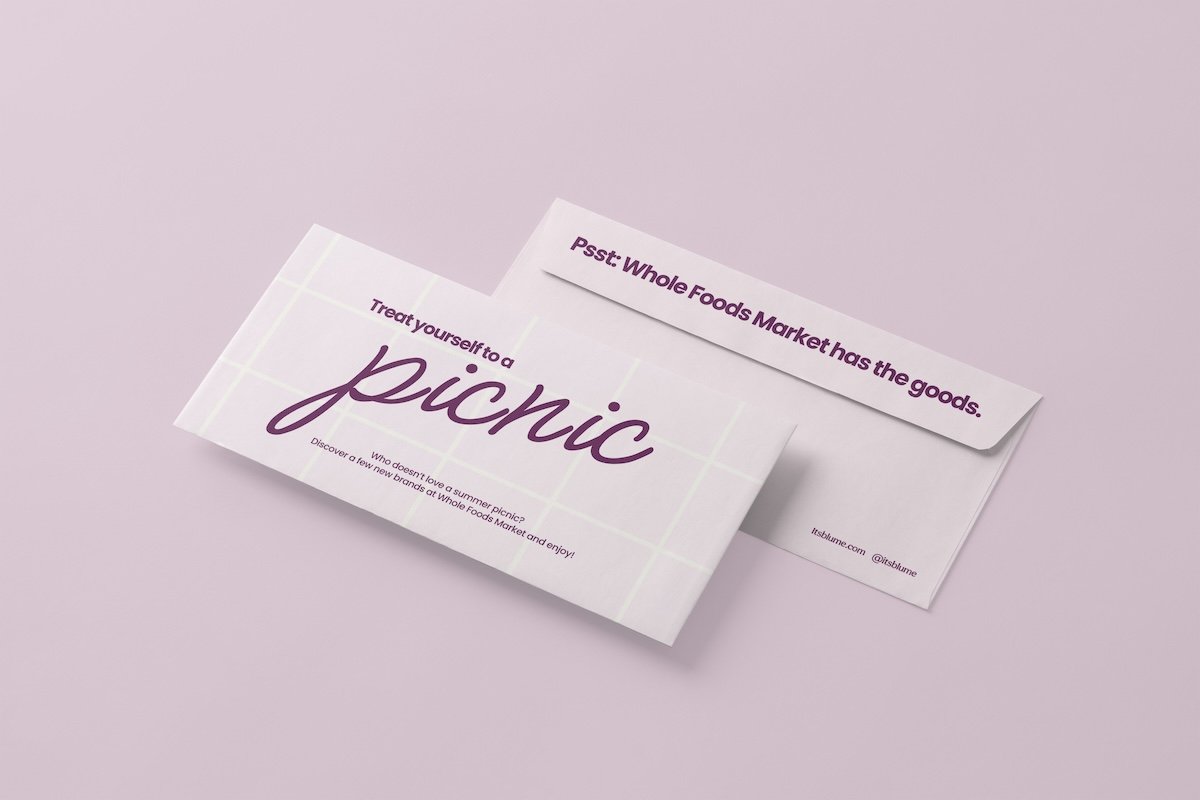
Thirty-nine percent of Americans say they would try a new brand because of a coupon. That single number from Capital One Shopping explains why consumer startups — brands with real distribution deals and real shelf space — are quietly stepping away from Meta ad spend and mailing physical paper to targeted households. Blume, a Canadian superfood brand, sent coupons to 2,500 California households timed to a holiday weekend, bundled with three partner brands to split costs, and called the total spend the equivalent of two in-store demo events reaching 50 people each. The math was that simple.
The mechanism behind the resurgence is not nostalgia — it is economics. Facebook and Instagram advertising costs are rising. Search and retail media have become auction markets where smaller brands lose to larger budgets. A physical coupon mailed to a pre-screened household near a specific store costs a fraction of a comparable digital impression — and unlike a banner ad, it cannot be skipped, blocked, or buried by an algorithm. Viv For Your V, a period-care startup, saw a 36% month-over-month sales lift at one retail location after distributing coupons. No A/B test on Instagram produced that result.
But this story is not about paper coupons making a comeback. It is about the structural limits of digital marketing becoming visible — and smart brands building physical touchpoints that algorithms cannot touch.
PART 2 — THE MOLDOVA ANGLE
Moldovan retail — from local supermarket chains to pharmacy networks to specialty food producers selling through modern trade — operates in a market where shelf presence is still being established and brand recognition is built slowly, through repetition and trust. The same problem Blume described — getting on the shelf is only half the battle — is the daily reality for any domestic producer trying to compete with imported goods on the same shelf. The coupon mechanic, whether physical or adapted to Moldova's context, addresses exactly that conversion gap between awareness and first purchase.
Moldova's consumer culture already runs on word-of-mouth and personal recommendation — which means a coupon handed at a community event, included in a delivery package, or distributed through a pharmacy counter carries implicit social endorsement. That is not a workaround for weak advertising infrastructure. That is a structural advantage.
What is the cost per first-time customer you are currently paying through digital channels — and have you measured it honestly against alternatives? Most small and mid-sized Moldovan businesses invest in boosted posts without tracking the actual conversion to first purchase.
Do you have any mechanism right now that creates a physical, tangible reason for a new customer to choose you over a familiar brand — once, just once? The first transaction is the hardest and the most valuable; everything after it runs on satisfaction and habit.
Are there two or three non-competing businesses in your category whose customers overlap with yours — and have you ever explored a joint activation? Blume split its coupon campaign cost across four brands; the unit economics only worked because no single brand carried the full weight.
Moldova has 40,000 IT professionals, a growing diaspora sending capital home, and an agricultural export base that is learning to build brands rather than just ship commodities. The infrastructure for smarter customer acquisition already exists — the question is whether businesses here will recognize that what global startups are rediscovering with paper coupons is something this market never stopped doing.
If your competitor can be outspent on digital but cannot be out-trusted in a room — what are you doing to be in the room?

47% of Consumers Say Emotional Value Equals Price — What That Means for Moldova's FMCG Sector
The shift from transactional to emotional branding is not a luxury strategy. It is the next competitive threshold — and Moldova's market timing is better than it looks.
PART 1 — THE GLOBAL STORY
Forty-seven percent of US consumers now say that emotional value carries the same weight as product quality and price when making purchase decisions, according to Mintel's 2025 research on consumer packaged goods. That number alone reframes the entire conversation about how brands compete. The old model — better product, lower price, wider distribution — is no longer sufficient as a standalone strategy. Brands that fail to build emotional resonance are increasingly competing on a shrinking battlefield of margin and volume.
The mechanisms behind this shift are concrete, not abstract. Loyalty programs are migrating from discount-based rewards toward curated experiences. Storytelling built around cultural identity, nostalgia, and shared values is outperforming promotional messaging in engagement metrics. Personalisation — once a premium feature — is becoming table stakes, with 63% of Gen Z and Millennials describing their favourite brands as those that feel like friends. The Flipkart and Cycle Agarbatti campaign in India, which transformed bus stops into sensory nostalgia experiences evoking the scents of a traditional festival, is one example of how even low-unit-value products can generate outsized emotional equity.
But this story is not about branding budgets. It is about who owns the relationship with the consumer — and whether that relationship is transactional or durable.
PART 2 — THE MOLDOVA ANGLE
For Moldova's food and beverage producers, local dairy and agri-food brands, and personal care retailers, the timing of this shift deserves serious attention. Emotional branding in the West has required years of unlearning price-first positioning. Moldova's consumer market is still forming those habits — which means the cost of building emotional equity now is structurally lower than it will be in five years, when the market becomes more saturated and more competitive with EU-integrated supply chains.
Moldova's word-of-mouth culture is not a limitation to work around — it is the infrastructure on which emotional branding runs naturally. Consumers here make purchase decisions based on trust, community endorsement, and personal familiarity. That is exactly the behavioral soil in which emotional brand strategies take root fastest. Local supermarket chains, private medical clinics, and agri-food exporters targeting diaspora consumers already have latent emotional assets they have not yet converted into systematic brand strategy.
What story does your brand tell that no competitor can replicate? Emotional branding without a specific, authentic narrative defaults to generic goodwill — which earns nothing.
Are your loyalty mechanisms rewarding transactions or deepening relationships? The difference between a discount card and an experience a customer remembers is the difference between retention and advocacy.
Does your customer feel that your brand shares their values — or just sells them a product? With 56% of global consumers requiring value alignment before purchasing, this is no longer a positioning question. It is a revenue question.
Moldova has 40,000 IT professionals capable of building the personalisation and CRM infrastructure this strategy requires, agricultural exports with genuine provenance stories worth telling, and a diaspora audience actively looking for emotional connection to home. The question worth sitting with is this: if emotional value already equals price in the minds of nearly half of global consumers, what are you currently doing to earn it?

From zero to $750 million in four years: what Casper's mattress playbook means for Moldovan retail
The real lesson from Casper is not about e-commerce — it's about who owns the customer relationship.
Casper went from a startup with no retail presence to $750 million in annual revenue in four years, eventually reaching a $1.1 billion valuation — by selling mattresses online. The product itself was unremarkable. What was remarkable was the system built around it: a 100-night trial guarantee that eliminated purchase risk, a referral engine that turned buyers into a sales force, a content strategy that answered every pre-purchase question before a competitor could, and an email lifecycle that treated post-purchase communication as a revenue channel rather than an afterthought. The company did not win on product. It won on architecture.
But this story is not about e-commerce. It is about what happens when a business stops thinking about the transaction and starts thinking about the relationship that follows it — specifically, the shift from customer acquisition cost to customer lifetime value. Casper's real asset was not its mattress. It was the compounding trust it built with each buyer, and the referral loops that trust generated.
In Moldova, furniture and home goods retailers, private medical clinics, and specialty food importers are all operating in a market where word-of-mouth already does the heavy lifting that paid advertising does elsewhere. That is not a limitation — it is structural leverage. The infrastructure Casper built with significant capital to manufacture trust artificially already exists here organically. The gap is not in customer loyalty; it is in the systems that capture, extend, and monetize that loyalty deliberately. A 30-day return window communicated clearly, a post-purchase follow-up sequence, a referral incentive with no friction — none of these require a Silicon Valley budget. They require intention.
For anyone building in this category, the real test comes down to three things:
Does your guarantee do work for you, or does it just exist on paper? A guarantee that customers never hear about before purchase is not a trust-builder — it is a liability clause.
Is your post-purchase communication designed to generate the next sale, or does it stop at the receipt? The window between delivery and the customer's first conversation with a friend about your product is the highest-leverage moment most businesses leave empty.
Do you know which customers refer others, and have you built anything specific for them? In a market this size, a small referral loop runs through a large share of the addressable population faster than any ad campaign could.
Casper eventually stumbled by expanding too fast into physical retail and losing focus on the customer relationship that made it. The question worth carrying: if your best asset is the trust your existing customers already have in you, what are you building to make sure that asset compounds?