
Beverages outsell burgers: what McDonald's 9% drink menu surge means for Moldovan food businesses
When drinks become the destination, not the side order, the entire logic of running a food business changes.
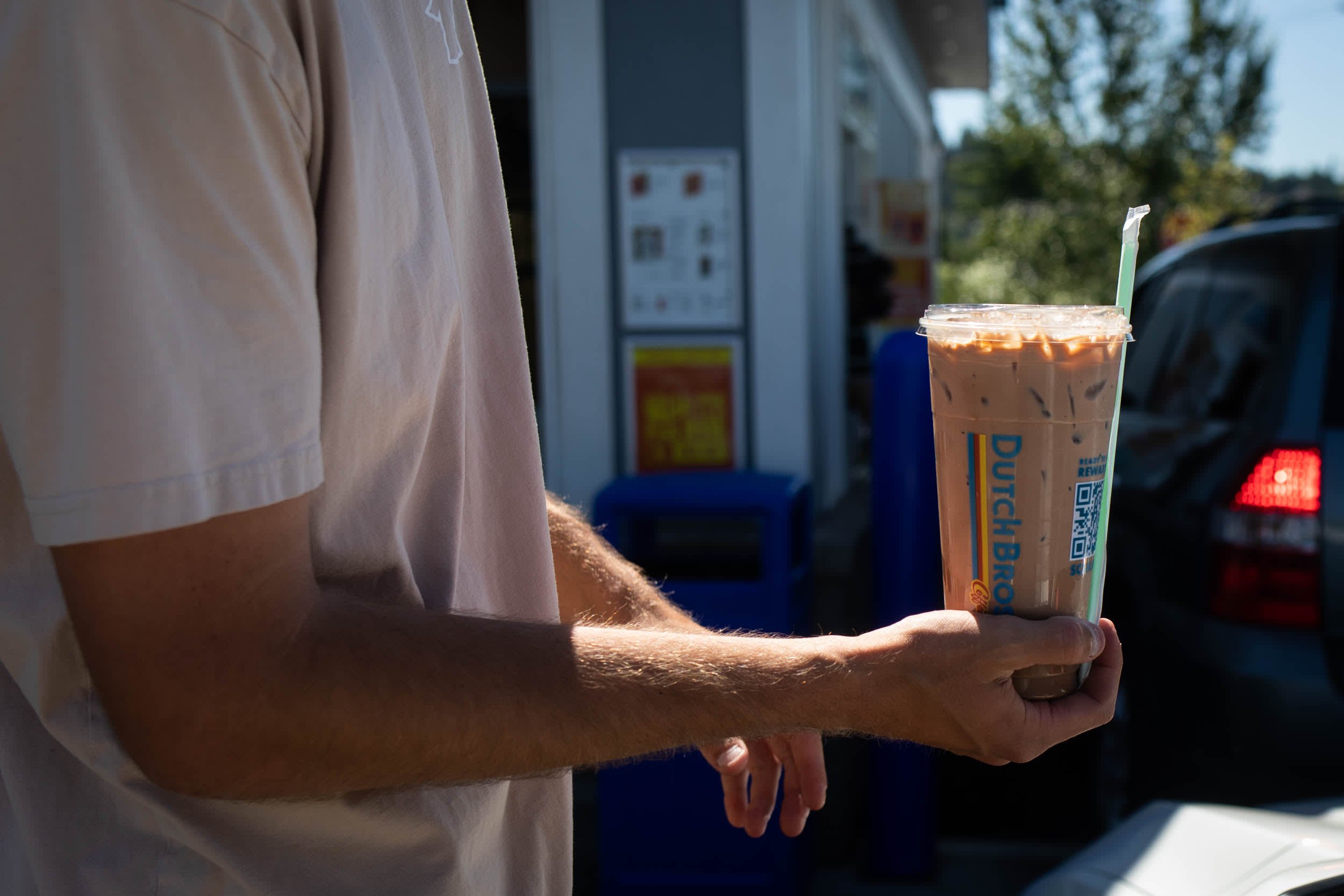
The number of beverages offered by the top 500 restaurant chains grew by more than 9% in a single year, according to Technomic's 2025 Away-From-Home Beverage Navigator Report. That figure alone would be unremarkable if it were simply a menu expansion story. It is not. What is happening across McDonald's, Dunkin', Starbucks, and Dutch Bros is a structural redefinition of why people walk through the door — and it has implications far beyond American fast food.
For decades, the beverage was the footnote. You ordered a burger, and you added a drink. That logic has now inverted. In a 2024 survey cited in the Technomic report, 22% of consumers said their primary reason for visiting a chain was to get a pick-me-up — up from 20% in 2023 — while 20% said they came to wash down food. Those two motivations switched places from the prior year. The drink is no longer the accessory. It is the occasion. McDonald's CEO Chris Kempczinski said it plainly on a recent earnings call: beverages are "growing and more profitable than food," with full-margin products that franchisees would not have to discount. Dunkin' reported its Refreshers platform hit record unit sales, up more than 30% year-on-year in its most recent quarter.
The deeper insight is not that chains are launching new drinks. It is that they are engineering a separate revenue stream that runs on different economics — higher margins, stronger brand association with a specific moment in a customer's day, and a product that is genuinely difficult to replicate at home. Starbucks, still navigating a 2% year-on-year U.S. sales decline, is preparing a late fourth-quarter launch of protein cold foam under CEO Brian Niccol's turnaround strategy. McDonald's will begin an expanded market test of new drink lines in 500 restaurants across Wisconsin and Colorado on September 2, including cold brews, "dirty sodas," and Refreshers developed from learnings of its now-closed CosMc's concept.
For anyone operating in Moldova's food and beverage sector — café owners, quick-service restaurant operators, even the growing segment of grab-and-go food retail — this trend is worth reading carefully. The Moldovan market is at an earlier stage, which means the window to establish a beverage identity before the category becomes crowded is still open. A café that positions itself as a destination for specialty cold drinks, rather than a place where drinks accompany a pastry, is building a fundamentally different business. The margin structure, the repeat visit frequency, and the customer's mental framing of what the place is for — all of it shifts. The Technomic report noted that specialty coffees and energy drinks saw the most growth over the past two years globally, while hot coffee and tea declined on menus. That directional signal is not specific to the United States.
Before assuming this trend either does or does not apply to your operation, it is worth asking yourself the right questions. Is your current beverage menu generating repeat visits on its own, or do customers only order drinks because they are already there for food? Do you know which specific drink — if made remarkable enough — could become the reason someone crosses town to reach your location rather than the nearest alternative? And are your margins on beverages actually higher than on food, or have you never separated the two in your cost accounting? These are not rhetorical. The economics of the global chains suggest that operators who have not run those numbers are likely leaving money on the table in the most literal sense.
Ultimately, the question worth carrying is this: if you stripped your food menu entirely tomorrow, would any customer come back just for what you pour into a cup?
Most food businesses in Moldova treat beverages as a supporting category — priced low, restocked on autopilot, and rarely reviewed for margin contribution. A more deliberate approach starts with a single, well-executed signature drink that gives customers a concrete reason to return — and a story worth telling someone else.
SourceSee also

For every loyalty programme that works, 12 fail — and Moldovan retailers are making the same mistakes as everyone else
Gamification is not a gimmick. It is the structural fix that most loyalty programmes are missing.
For every loyalty programme that succeeds, twelve others fail. That ratio, cited by gamification platform Playable, is not a rounding error — it is a systemic problem baked into how most brands think about customer retention. The wasted budget is one thing. The erosion of customer trust is another. And the uncomfortable truth is that both are largely self-inflicted.
The two most common failure modes are almost embarrassingly predictable. First, programmes reward spending and nothing else — the classic points-for-purchase model, built on the assumption that loyalty can be transacted. It cannot. Loyalty is emotional before it is transactional, and a card in a crowded wallet generates no emotion whatsoever. Second, programmes do not personalise. According to the data cited in the original research, 70% of consumers say they engage more with loyalty programmes that tailor their marketing, yet fewer than 25% of programmes actually do this. In an era of abundant customer data, that gap is not a resource problem — it is a priorities problem.
The deeper insight here is counterintuitive: the loyalty programme itself is not the product — the experience of belonging to it is. Harvard Business Review has reported that a 5% increase in customer retention can lift profits by 25% to 95%. Existing customers are 50% more likely to try new products and spend 31% more than new customers. And yet the average consumer belongs to more than ten loyalty programmes simultaneously, most of which deliver no meaningful differentiation. Volume without depth is just noise.
This is where gamification enters as a structural solution rather than a marketing decoration. By embedding game mechanics — scratch-card sign-ups, monthly trivia challenges, in-app spin-to-win moments, product recommenders — into the loyalty journey, brands convert passive membership into active participation. Crucially, each interaction generates zero-party and first-party data: preferences and behaviours volunteered directly by the customer, not inferred from third-party sources. That data quality difference matters enormously when building personalisation at scale.
For businesses operating in the Moldovan retail, hospitality, and services sectors, this framework lands differently than it might in a Western European context — and that difference is worth sitting with. Moldovan consumers have historically made purchasing decisions through trust networks rather than promotional mechanics. A discount card does not replace a personal recommendation. But that cultural baseline is also an asset: if the emotional register of a loyalty interaction can be raised — if a customer feels seen rather than just tracked — the return on that investment compounds faster in a relationship-driven market than in an anonymous one.
The questions worth asking at this point are not abstract. Does your current retention mechanic reward anything beyond a completed transaction, or does it effectively ignore the customer between purchases? If you collected data on your customers' preferences last quarter, did that data change anything about how you communicated with them — or did it sit in a spreadsheet? And if your best customer and your newest customer receive the same loyalty communication today, what does that tell you about how much you actually value the distinction between them?
The gamification tools that make this possible are no longer enterprise-only. The real question for any operator running a retention programme right now is not whether to personalise — the data on that is unambiguous — but whether the programme architecture they have built is capable of doing anything other than counting points.
Most businesses in this space treat loyalty as a discount mechanism and measure success by card issuance. A more deliberate approach starts with the question of what behaviour — beyond spending — the programme is actually designed to reward.

From 52,000 cans to 108 million: what Carbliss's 27,000% growth teaches Moldova's beverage market
A Wisconsin kitchen experiment became America's fastest-growing food and beverage company. The real lesson isn't the product — it's the strategy.
In 2019, Carbliss sold 52,000 cans of ready-to-drink cocktails out of a home kitchen in Plymouth, Wisconsin. By 2025, the company projects sales of 108 million cans, has earned the Wine & Spirits Hot Brand Award for three consecutive years, and sits at number five among all canned RTD brands in U.S. food retail scans. That is a 27,000 percent growth rate over three years — a number that sounds like a misprint until you understand exactly how it was built.
The obvious read is that Carbliss found a gap in the market: consumers who wanted the clean nutrition profile of a hard seltzer but were tired of the taste. CEO and co-founder Adam Kroener described the founding insight plainly — people were drinking seltzers not because they liked them, but because they felt less guilty about it. Carbliss answered with zero carbohydrates, zero sugar, 100 calories, and actual flavor. The product logic is clean. But the deeper story is the go-to-market discipline behind it. While competitors launched nationally and spread thin, Carbliss went narrow and deep — embedding itself community by community, adding between 1,000 and 1,500 new accounts every month, and dominating individual states before moving to the next. In Wisconsin alone, the brand generated over $13 million in retail sales, outperforming the national category leader who posted $7.8 million in the same market over the same period.
The uncomfortable insight for anyone building a consumer brand is this: the product was not revolutionary. Zero-sugar, flavored alcohol is not a new idea. What was different was the refusal to scale prematurely, backed by a financial partnership with Bank of America that gave the company room to grow without overextending. Carbliss currently reaches only 20% of the U.S. population, and that constraint is deliberate.
For Moldova's beverage producers — whether local wine labels, craft beer operations, or the still-nascent category of premium non-alcoholic drinks — the Carbliss story is a precise mirror, not an aspirational fantasy. Moldova has a real production base and a consumer market that has grown more sophisticated. The question is whether local producers are applying the same geographic discipline or simply hoping broader distribution will create the depth that focused presence actually builds. Before drawing conclusions about your own brand's trajectory, it is worth sitting with a few honest questions. Are you adding new points of sale because the market in your existing accounts is already saturated, or because you haven't fully worked what you already have? Is your growth in volume driven by genuine repeat purchase, or by the novelty effect of initial placement? And when you describe your brand's identity to a distributor, does it land as a clear, differentiated proposition — or as a category description with a label on it?
The Carbliss model suggests that in a fragmented, trust-driven market, being the dominant choice in a small geography is worth more than being an available choice everywhere. Moldova's retail environment — where personal relationships between sales representatives and store buyers still move more product than promotional spend — may actually be better suited to this kind of deep, local-first strategy than most Western markets. The real question is not whether a Moldovan beverage brand can grow fast, but whether it is building the kind of account-level loyalty that makes that growth defensible once a larger competitor notices the same opportunity.
Most local producers in this space tend to prioritize distribution width — more regions, more retail chains, more SKUs — treating coverage as a proxy for brand strength. A more grounded approach looks like the opposite: fewer markets, higher engagement per account, and a clear answer to why the brand's best customers keep coming back.

From £3.3 million in hair oil sales to a lesson every Moldovan product brand needs to hear
How Erim Kaur turned a grandmother's formula into a luxury brand — and why emotional authenticity is now the scarcest ingredient in consumer markets.
£3.3 million. That is what London-based entrepreneur and influencer Erim Kaur has generated since launching ByErim in 2019 — a luxury haircare brand built around a hair growth oil formulated from eight pure oils, including Amla, Argan, Coconut, and Castor. She sold 250 units in the first four hours of launch. She was 30 years old. The brand did not begin with a gap analysis or a pitch deck. It began with grief, a grandmother's hands, and a social media audience of young South Asian men and women who had nobody to teach them how to care for themselves.
The conventional read on ByErim is that it rode a trend. Hair oiling — an ancient Indian practice documented in Sanskrit medicinal texts like Charaka Samhita — has become a mainstream beauty category in the West. The hashtag #hairoil has nearly half a million posts on TikTok. Brands like Nikita Charuza's Squigs Beauty, Akash and Nikita Mehta's Fable & Mane, and Kuldeep Knox's Chāmpo have all emerged alongside ByErim in a crowded market. But trend-riding alone does not explain £3.3 million in verified sales. Addison Rae's Item Beauty was discontinued by Sephora in 2023. Arielle Charnas' Something Navy stopped selling through its own website. Both had reach. Neither had what Kaur describes as followers who are "emotionally invested."
The deeper story is about the architecture of trust. Kaur did not cast a wide net. She stayed focused on the audience that already followed her — people who had watched her document the factory rejections, the hand-packaging of bottles, the unglamorous early chapters of building something real. "By the time I launched it, people were buying regardless because they wanted to be part of that journey," she said. The product was almost secondary. What people purchased was continuity — a relationship that had been earned before a single transaction occurred.
This dynamic translates directly to the Moldovan consumer market, particularly in categories like local food production, natural cosmetics, and handcrafted goods — segments where the product itself is often comparable to imported alternatives, but the story behind it remains largely untold. Moldovan consumers are not easily moved by advertising. They respond to people they trust, and trust here is built slowly, through consistency and personal exposure rather than campaign budgets. A producer of artisanal goods or a small cosmetics brand in Moldova sits on exactly the kind of origin story that Kaur monetized — generational knowledge, local ingredients, a method passed down rather than engineered in a lab. That story exists. It is simply not being told with any strategic intent.
Before dismissing this as a social media argument, consider the structural questions it raises for any owner building a product brand in this market. Do your customers know why this product exists — not what it contains, but where it came from and who made it? Are you building an audience before you need to sell to them, or only activating communication at the moment of launch? And if your brand disappeared tomorrow, would anyone feel the loss personally — or would they simply switch to the next available option?
Kaur's £3.3 million did not come from having the best hair oil on the market. It came from being the most trusted person in the room before the room became a marketplace. The question for any Moldovan product owner is not whether they have a good enough product. It is whether anyone outside their immediate circle has any reason to believe them.
Most operators in this space in Moldova default to product-first communication — leading with ingredients, certifications, or price. A more deliberate path starts earlier, with the story of why the product exists at all, shared consistently before there is anything to sell.

From $237,000 to $32 million in 4 years: what Bolt Farm Treehouse teaches operators in emerging markets
The real lesson isn't about treehouses — it's about what happens when experience becomes the product.
In 2021, Seth and Tori Bolt purchased a piece of land in Tennessee for $237,000. Four years later, their short-term rental business, Bolt Farm Treehouse, carries a valuation of over $32 million. That is not a rounding error. That is a 134x return on the initial land cost, built not through financial engineering but through a deliberate decision to sell an emotion rather than a room.
The mechanics of their growth are worth examining carefully. Bolt Farm charges an average nightly rate of $700 and runs at a 93% occupancy rate — numbers that most hotel operators with far larger budgets would consider aspirational. They achieved this, in part, by abandoning platforms like Airbnb entirely and building a direct booking system that kept margins intact and turned guests into repeat customers who search for the property by name. They also ran into serious regulatory friction — zoning battles in Charleston County eventually pushed them to refocus on Tennessee — and treated that setback as a tuition payment rather than a failure. The business that emerged from those constraints is more focused, more profitable, and harder to replicate.
The deeper insight here is not that treehouses are a good investment. It is that commoditized hospitality — the kind where every listing looks identical and guests choose by price — is being quietly displaced by experience-led properties that compete on memory rather than amenity checklists. Bolt Farm is not in the lodging business. It is in the story business. That distinction is worth sitting with.
For operators in Moldova's tourism and hospitality sector, this trajectory is not as remote as it might initially appear. The country has natural assets — river landscapes, wine country, rural architecture — that remain largely unleveraged as deliberate guest experiences. A guesthouse in the Codru forest or a vineyard stay in the Nisporeni area is, structurally, closer to Bolt Farm's model than it is to a Chisinau apartment listed on a booking platform. The gap is not geography. It is intent.
Moldovan consumers and international visitors to the region are increasingly skeptical of generic offerings — a clean room and a breakfast buffet no longer justify a premium price. What does justify it is specificity: a place that feels designed for a particular kind of guest, with a personality that carries through from the physical space to the booking experience to the follow-up after checkout. Seth Bolt's marketing background and Tori Bolt's design sensibility were not incidental to their success — they were the product. This raises questions that any hospitality operator in this market would benefit from asking honestly. What is the one emotion a guest should feel within the first ten minutes of arriving at your property — and does every physical detail in that space currently support it? If a guest cannot find your property without going through a third-party platform, do you actually own your customer relationship, or are you renting access to someone else's audience? And when you last faced a regulatory or operational setback, did it cause you to exit the situation or to redesign around it?
The Bolt Farm story will be read by many as inspiration. The more useful reading is as a case study in pricing power — specifically, how a business earns the right to charge $700 a night in a market where competitors charge a fraction of that. The answer has nothing to do with luxury finishes and everything to do with the conviction that the experience you are selling cannot be found anywhere else.
Most operators in this space default to competing on availability and price, which is a race that consistently rewards the largest platforms and not the individual property owner. A more deliberate path starts with a single, clearly defined guest and works backward from what that person is willing to pay to feel something they cannot feel at home.

From Rs 15,000 and a 150 sq. ft. room to 8,000 rooftops: what Ksquare Energy's story says about the real edge in emerging markets
The bootstrapped Indian solar company didn't win by being cheap — it won by controlling quality at every layer of the chain.
Ksquare Energy started in 2017 with Rs 15,000 in savings, a rented room in Ahmedabad, and a founder who had just been denied an education loan. Eight years later, the company posted Rs 74 crore in revenue for FY 2023–24, reported 56% year-on-year growth, and has set a target of Rs 225 crore by FY 2025–26. It now covers 23 Indian states, supplies over 650 EPC firms, and ranks among the top 10 vendors under India's PM Surya Ghar Yojana — all without a single rupee of external funding. The numbers are striking. But the mechanism behind them is more instructive than the scale.
Founder Kuldip Sorathiya began as a commission agent reselling third-party solar products. The pivot came not from a strategy retreat, but from field reality: recurring quality failures in cables and components were undermining customer trust. Instead of switching suppliers, he started manufacturing the components himself — ACDBs, DCDBs, cables — and launched the proprietary brand Solsquare. That decision compressed the value chain and gave the company control over quality, delivery timelines, and product iteration. According to Mercom India, rooftop solar installations in India surged 232% year-on-year in Q1 2025, touching over 1.2 GW. Ksquare didn't just ride that wave — it had already built the infrastructure to supply it.
The deeper lesson isn't about solar. It's about the structural advantage of vertical integration in a market where quality is inconsistent and trust is scarce. When the underlying supply chain is unreliable, the business that controls more of it doesn't just reduce costs — it becomes the standard. That pattern appears in every emerging market at a certain stage of development, and Moldova is no exception.
For the Moldovan renewable energy sector — solar installation companies, energy service providers, importers of photovoltaic equipment — the Ksquare story maps onto a familiar set of constraints. Local installers typically depend on imported components whose quality varies by shipment and by supplier relationship. A service guarantee is rare. Post-installation support is often informal. The market is growing, but it is growing on a foundation of inconsistent execution, which means the window for differentiation through reliability is still wide open. This is where it becomes worth asking the right questions rather than drawing easy conclusions. If your business depends on components or inputs you don't control, what happens to your reputation when those components fail? If a competitor offered a formal service guarantee — something equivalent to Ksquare's 5-Year Zero Loss Guarantee — would your current clients stay with you on price alone? And if you have accumulated field knowledge about what fails and why, are you using that knowledge to improve what you offer, or simply absorbing the cost of recurring problems?
Ksquare's trajectory also illustrates something that applies directly to capital-constrained operators: profitability since inception, built through reinvestment rather than fundraising, gave the company the credibility and the leverage to now consider strategic capital on its own terms. That sequence — prove the model first, then open the door to outside money — is available to any operator willing to be patient about scale.
Most businesses in Moldova's energy services space tend to compete primarily on installation price, treating components as a cost variable rather than a quality lever. A more deliberate approach looks like treating field failures as product intelligence — and using that intelligence to build something proprietary, even if it starts small.

The #deinfluencing hashtag has been used over 26,000 times — and it's rewriting the rules of retail everywhere, including Moldova
When consumers start auditing their closets instead of filling them, the business model built on volume starts to crack.
The hashtag #deinfluencing has been used more than 26,000 times on TikTok, filled with content creators actively working to undo the impulsive purchasing behaviour the platform helped create. Alongside it, pledges like the "Rule of 5" — limiting fashion purchases to five items per year — and "no-spend" challenges have moved from niche corners of the internet into mainstream consumer conversation. This is not a temporary mood. At the World Economic Forum in Davos in January 2024, the head of the World Trade Organization, Dr Ngozi Okonjo-Iweala, called on world leaders to "rethink old growth models." The pressure is arriving from both the bottom and the top simultaneously.
The obvious read is that this is a Western phenomenon — a reaction to decades of hyper-consumerism that most Moldovan businesses have not yet experienced at scale. But that framing misses the more uncomfortable insight. The research behind these movements suggests the problem is not abundance itself — it is a business model structurally dependent on perpetual volume growth. Joseph Merz, chairman of the Merz Institute and senior fellow at the Global Evergreening Alliance, put it plainly: "We're not going to achieve sustainability with fashion houses constantly needing to increase growth every year. No amount of circularity, no amount of anything is going to work." The question is not whether Moldovan retail will face this tension. It is whether local operators will notice it arriving before it disrupts them.
For businesses operating in Moldova's retail and fashion sector, the deinfluencing wave carries a specific signal worth decoding. Katia Dayan Vladimirova, senior lecturer at the University of Geneva and founder of the Sustainable Fashion Consumption research network, documented through research that consuming less actually increases people's well-being. Her vision for a rebalanced fashion economy suggests that in a future model, only 40 per cent of customer spending would go toward new items — down from today's 97.9 per cent — while 30 per cent would flow to rental or digital fashion experiences, and the remaining 30 per cent to repairs and upcycling. That is not a forecast for collapse. It is a map of where new revenue streams will form.
For a clothing retailer, a multi-brand boutique, or even a local tailor operating in Chisinau today, this research raises questions worth sitting with. Are your customers buying from you because your product genuinely solves a need, or because the purchase experience itself is the product? If consumers in your segment began auditing what they already own — as Tiffanie Darke's Rule of 5 pledge, launched in January 2023, encouraged — would your current offer still have a place in their decisions? And if repair, alteration, and restyling services were positioned not as low-margin afterthoughts but as premium experiences, would your business be structured to capture that revenue?
Moldovan consumers have always been skeptical of advertising and tend to make purchasing decisions based on trust and personal recommendation rather than promotional pressure. That cultural baseline is, in effect, a mild form of deinfluencing already baked into the market. The global shift now arriving simply gives that instinct a language and a framework. As Rachel Arthur, who authored the United Nations' Sustainable Fashion Communication Playbook, noted, sustainable consumption needs social proofing — it needs to become the aspirational choice, not the austere one. In a small, trust-driven market, the operator who frames restraint as discernment rather than limitation may find they have a credibility advantage most Western brands are still struggling to construct.
What is the more durable business: the one that sells more items every season, or the one that becomes indispensable to how customers think about what they already have?
Most retail operators in Moldova continue to orient their growth around transaction volume and seasonal replenishment cycles — the default logic of the industry. A more deliberate approach looks like building service layers around existing product — alterations, curation, restyling — that generate loyalty and margin without depending on the customer buying something new every time they walk in.