
From Bondi Beach to 60 countries: what Liveheats' $1.3 million raise tells Moldovan business owners about niche markets
A surf competition app built on a spreadsheet problem just secured serious capital. The real lesson isn't about sports.
Liveheats, an Australian sports technology startup, raised $1.3 million in a Seed round in March, backed by investors that include surfing legend Joel Parkinson. The platform now operates in over 60 countries, targets A$10 million in revenue by 2028, and is in early conversations about powering scoring for the Brisbane 2032 Olympics. It began, almost absurdly, with two friends watching event organizers struggle with pens and spreadsheets on a beach in Bondi in 2016.
The instinct most people take from this story is that passion plus technology equals a fundable startup. That reading is too easy. What cofounders Chris Friend and Fernando Freire actually did was identify a structural inefficiency that existed everywhere but was being ignored everywhere — because the communities experiencing it lacked the resources to commission expensive legacy systems and lacked the visibility to attract serious developers. Action sports were not a niche problem. They were an underserved global market wearing the costume of a niche problem.
That distinction matters enormously if you are running a business in Moldova. The country has entire industry categories that look niche from the outside but represent real, recurring, and largely undigitized operational pain. Consider the local event and competition management space — youth sports leagues, regional festivals, amateur athletic clubs — where coordination today still happens through phone calls, printed schedules, and WhatsApp groups. The gap Friend spotted at Bondi exists here too, just wearing different clothes. And the pattern extends well beyond sports: private medical clinics managing appointment flows manually, small logistics operators without real-time tracking tools, agricultural cooperatives with no shared data infrastructure. The question is not whether the inefficiency exists. It is whether anyone is paying attention to it.
This is where the Liveheats story offers something more useful than inspiration. Friend has said he built his initial customer list by writing down the key organizations he needed to reach and then simply getting on planes. The product's early credibility came not from marketing but from the fact that it was built by someone who had personally experienced the problem it solved. Moldovan operators tend to know their own sectors with exactly that depth — the kind of tacit knowledge that is genuinely hard to replicate and that investors, when they are paying attention, find compelling. The question worth sitting with is whether that knowledge is being treated as a strategic asset or simply as daily routine.
Three questions that any business owner here should be asking right now: Are the inefficiencies you manage every day also inefficiencies your competitors have simply accepted as permanent? Is the local market small because demand is genuinely limited, or because no one has yet built the tool that makes participation easy? And if an outsider with capital arrived tomorrow and looked at your sector, what would they see that you have stopped seeing?
Liveheats had A$2 million in revenue before it raised external capital. It validated the model locally, then moved internationally only after the product was proven. That sequencing is worth noting. The harder question — the one that stays with you — is this: how many Moldovan business owners are sitting on a Liveheats-sized insight right now, and have simply filed it under "not worth pursuing because the local market is too small"?
Most operators in sectors like this tend to digitize only what they are forced to — when a client demands it or a competitor moves first. The more deliberate path is to treat every manual workaround in your own operation as a signal worth investigating before someone else does.
SourceSee also

Beyond the logo: how a car dealer in Abu Dhabi built loyalty through sweat — and what Moldovan businesses can learn from it
Sponsorship without strategy is just a banner on a wall. One Middle East campaign shows what it looks like when it actually works.
Al Masaood Automobiles, the official dealer of Nissan, INFINITI, and Renault in Abu Dhabi, did not just put its logo on a wall this summer. It embedded itself into Abu Dhabi Summer Sports, a government-led initiative that transformed ADNEC into an indoor sports arena during the extreme summer heat — and built a marketing engine around the experience. The result was not a sponsorship in the traditional sense. It was a fully integrated campaign that moved people from awareness to test drive to qualified sales lead, all within an environment that felt like a community gathering rather than a sales floor.
The mechanics are worth studying. Al Masaood combined physical vehicle displays — including the Nissan Patrol, Patrol PRO-4X, and KICKS — with digital activations, influencer partnerships drawn from Abu Dhabi's fitness community, athlete testimonials, and real-time interactive polls. The earned media generated by influencer content extended the campaign well beyond the venue's physical walls. The key insight from Delia Sandu, Head of Marketing at Al Masaood Automobiles, is precise: when sponsorships are designed as holistic, multi-channel experiences, they stop being a cost center and start functioning as a community marketing platform where cultural relevance and commercial value meet at the same point.
The less obvious reading of this story is not about budget or scale. It is about the decision to treat a community moment as infrastructure rather than inventory. Al Masaood was not renting attention — it was earning it by being genuinely useful inside an experience people already wanted to attend. That distinction separates marketing that produces loyalty from marketing that produces impressions.
In Moldova, this logic applies directly to the fitness and active lifestyle sector, which has grown steadily but still lacks the kind of brand-community integration that turns a gym membership or a sports event into a relationship asset. A car dealership, a private medical clinic, a construction materials supplier, a financial services firm — any business that serves families and young professionals has an audience that is already gathering around sports, fitness, and wellness. The question is whether local operators are showing up as participants or as spectators holding a banner.
This is where the article becomes a professional mirror worth holding up. Before the next sponsorship budget is approved, three questions deserve honest answers. Does our brand have a reason to be inside this community moment beyond the fact that we can afford the placement fee — and can we articulate that reason clearly to the people attending? Are we building a two-way exchange with the audience, or are we broadcasting at them and calling it engagement? And do we have the operational setup — digital, social, on-ground — to convert the attention we generate into something measurable before the event ends?
The Al Masaood campaign succeeded because the answer to each of those questions was yes, and because each channel reinforced the others rather than running in parallel isolation. The multiplier effect Delia Sandu describes is not a media buy outcome — it is a design outcome. Which raises the question that any business owner in Moldova should sit with: if the community is already gathering, what exactly is stopping you from being part of it on your own terms?
Most operators in this market default to visibility — a logo, a banner, a branded table — and measure success by whether people saw the name. A more deliberate approach starts from the conversion question first: what specific action do we want someone to take during this event, and what does the entire activation need to look like in order to make that action feel natural rather than forced.
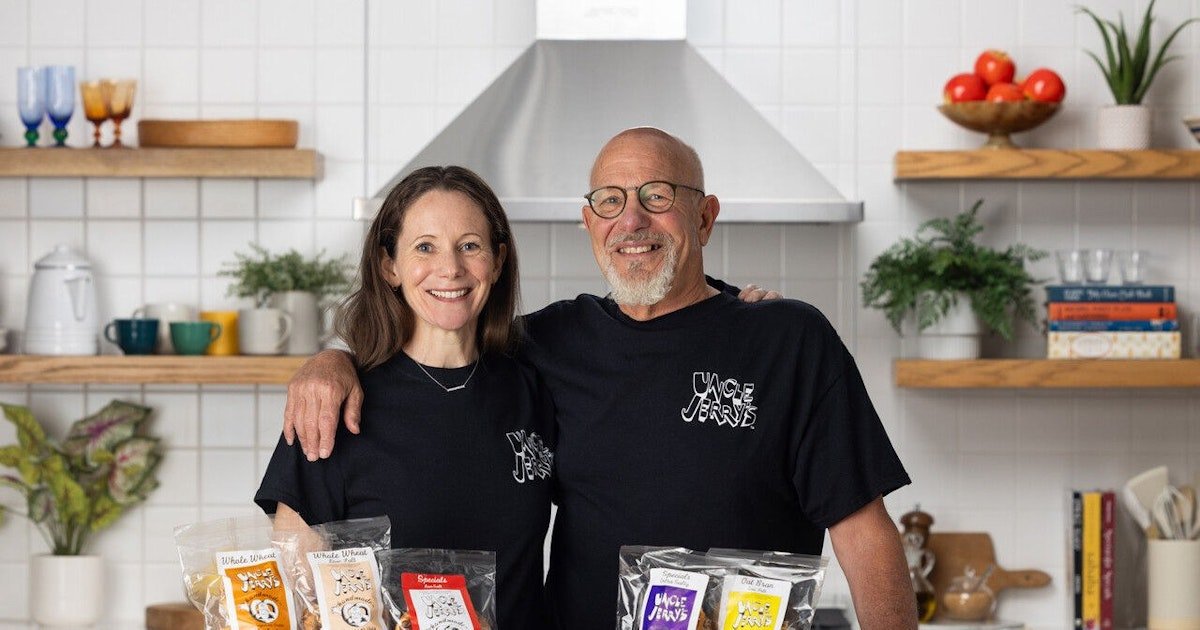
35% sales growth and only 5 ingredients: what Uncle Jerry's Pretzels teaches Moldovan food producers about the better-for-you moment
A small-batch American pretzel brand is outpacing its market by doing less — and the logic translates directly to Moldova's emerging artisan food sector.
The U.S. pretzel market was estimated at $2.27 billion in 2024, and according to Grand View Research, it is projected to grow at a compound annual growth rate of 3.1% through 2030. The primary engine of that growth is not innovation in flavor or packaging — it is the rising consumer demand for snacks that are simply less harmful. Obesity concerns are reshaping what people put in their carts, and the brands winning that shift are not always the largest ones. Uncle Jerry's Pretzels, a family-owned bakery in Lancaster County, Pennsylvania, recorded a 35% increase in sales in the first few months of 2025, outpacing the broader market by a significant margin.
The product itself is almost aggressively simple: water, flour, yeast, sourdough starter, and salt. No additives, no oils, no sugars, no preservatives. The result is a fist-sized pretzel at 90 calories — less than a quarter of the calorie count found in some mass-produced alternatives. Co-Owner Misty Skolnick describes the company's pitch as unchanged across nearly four decades: a better-for-you snack that has never needed to reinvent its core identity. What changed is the market finally catching up to what Uncle Jerry's was already doing.
The deeper insight here is not about pretzels. It is about the structural advantage of honest simplicity in a market saturated with processed complexity. Uncle Jerry's did not add a wellness claim to a chemical-laden product — it built the product clean from the start and waited for consumer priorities to align. That patience, combined with disciplined distribution through smaller regional partners rather than large organic food distributors, and a direct-to-consumer channel that now accounts for roughly a third of total sales, is what produced a 35% growth figure while the category grows at 3.1%.
For producers operating in Moldova's artisan and specialty food space, this story deserves a close read. The structural conditions are different, but the underlying dynamic is recognizable: a market where industrial, lower-quality product has long dominated shelf space, and where a growing segment of buyers is beginning to pay a premium for food they can actually understand. A small producer making preservative-free dairy, traditionally fermented products, stone-milled grain goods, or cold-pressed oils is sitting on the same kind of positioning advantage that Uncle Jerry's has held for decades — often without fully knowing it.
The questions worth sitting with are not abstract. Does your product's clean composition show up explicitly in how you sell it — on the label, in the pitch to a retailer, in the description on your website — or is it assumed and therefore invisible? Are you distributing through the largest available channel by default, or have you evaluated whether a more focused, smaller partner might protect your margin and your brand integrity the way Uncle Jerry's did with its regional distributors? And if you built a direct channel to your end customer today — bypassing the intermediary entirely for even a portion of your volume — what would that do to your unit economics over twelve months?
The Uncle Jerry's model also raises a harder question that applies with particular force in a small, price-sensitive market: if your product is genuinely cleaner and more labor-intensive than what sits next to it on the shelf, are you pricing it as a commodity or as a category of its own?
Most local food producers in Moldova default to volume-based wholesale as the primary revenue model, keeping retail and direct sales as secondary or occasional channels. A more deliberate approach treats direct-to-consumer not as a bonus but as a margin anchor — the channel that funds the patience required to grow everything else.
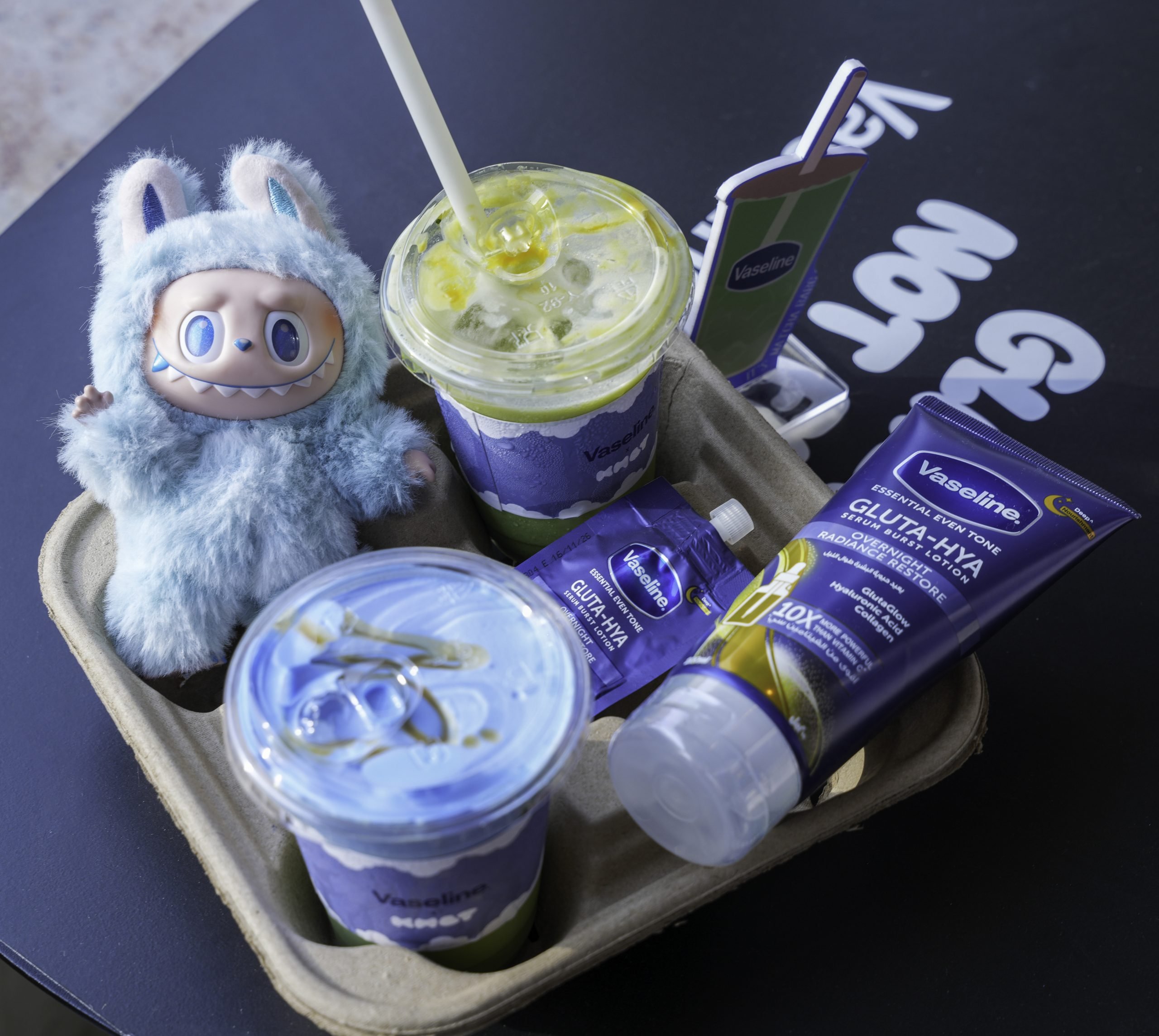
90 million reach from a 3-day pop-up: what Vaseline's Dubai activation tells Moldovan brand owners
When a global skincare brand turned a matcha café into a media machine, it quietly rewrote the rules for experiential marketing — and the lesson travels.
Over three days in July, Vaseline Arabia generated a potential reach of over 90 million, collected 377 pieces of content, and earned an estimated $500,000 in media and content value — all from a pop-up at a bakehouse café in Dubai. No television spot. No billboard. Just a carefully designed sensory moment that happened to be deeply shareable. The activation ran from 11 July to 13 July at Knot Bakehouse, where Vaseline paired its Gluta-Hya Day and Night lotions with two custom matcha drinks mirroring each product's benefits. Visitors who bought a drink received limited-edition merchandise, personalised at a live sticker station. More than 50 influencers attended, and within 72 hours, the content had already spread well beyond Dubai — a single TikTok video from a media outlet drew international visitors to the physical location.
The instinct is to read this as a story about influencer marketing. It is not. The influencers were a distribution mechanism, not the product. What Vaseline Arabia actually built was a coherent, detail-saturated environment — custom cup sleeves illustrated by Danya Bayomi, floor graphics, curated gift bags with branded scarves and keychains — that gave people a genuine reason to document and share. Ayah Alnagash, Lead PR at Unilever B&W, put it directly: attention to detail makes a difference, and those small but thoughtful touchpoints left a lasting impression. The earned media result was not accidental. It was engineered through specificity.
The deeper question this raises is not about scale — it is about method. Vaseline did not rent a larger audience. It created a denser experience and let the audience do the distribution. That logic applies whether your market is Dubai or Chisinau, and it is worth sitting with for anyone running a consumer brand in Moldova's retail or beauty sector.
Moldova's market for personal care and lifestyle products is still in a formative stage, which means the cost of owning a cultural moment is considerably lower here than in saturated markets. A local cosmetics retailer, a wellness studio, or even a café with the right product partnership could execute a version of this playbook at a fraction of the Dubai budget — if the thinking is right. The execution credits for Vaseline's activation included three separate specialist partners: Mumkin Marketing for creative and PR, PHD Media for media, and Helium Marketing Management for production and design. That level of coordination is not accidental either; the coherence of the experience came from disciplined partnership, not a single generalist agency doing everything at once.
Before dismissing this as a multinational's luxury, it is worth asking yourself a few honest questions. Does your current marketing produce content that your customers choose to share, or content that you pay to distribute? When you plan a product launch or seasonal campaign, is the physical or digital environment designed to be documented — or just to inform? And if a media outlet posted about your last activation tomorrow, would 135,000 people engage with it?
The real cost of this kind of marketing is not budget — it is intention. Most consumer-facing businesses in Moldova default to paid placement: a boosted post, a banner, a sponsored slot. The alternative is slower to plan but compounds differently — a moment so well-constructed that the audience becomes the channel.

Lego hit £4bn in sales by solving a problem parents didn't know they were paying for
The screen-free economy is real, it's growing, and Moldova's toy and children's goods market hasn't caught up yet.
Lego recorded sales of 34.6bn Danish kroner — equivalent to £4bn — in the first half of the year, a 12% increase that outpaced a global toy market that itself grew 7% over the same period. Net profit climbed 10% to 6.5bn kroner. These are not the numbers of a nostalgic brand coasting on goodwill. They are the numbers of a company that correctly identified a structural shift in parental anxiety and built a product strategy around it.
The insight from Lego's chief executive Niels B Christiansen is deceptively simple: the company competes for children's time, not just their toy budgets. Research from the audience research company GWI found that social media addiction ranked among parents' top three fears for their children — alongside the climate crisis and war. Lego did not create that fear. It simply positioned itself as the answer. The Botanicals range for adults, the Formula One grand prix-themed sets, the Bluey and Pokémon licensing deals, the She Built That campaign — each of these is a different entry point into the same underlying market: people who want engaged, screen-free time, for their children and, increasingly, for themselves.
The parallel story is equally telling. UK-based Yoto, maker of screen-free audio speakers for children, nearly doubled its sales to £94.8m and projected its first profit in 2025, according to a Financial Times report. Two companies, different products, same tailwind. That is not a coincidence — it is a category forming in real time.
For the Moldovan children's goods and toy retail sector, this matters in a specific way. The screen-time anxiety driving Lego's growth is not a Western peculiarity — it is a parental condition that exists wherever smartphones do. What differs is the supply side. A parent browsing a toy shelf in Chisinau is facing a market that has not yet organized itself around the screen-free proposition the way Western retail has. The gap between what anxious parents want and what local shelves offer is a commercial opportunity, not a cultural observation.
Any operator in this space — whether running a children's goods shop, a toy import business, or an activity-based learning format — should be asking themselves a sharper set of questions right now. Is your current product selection priced and positioned as entertainment, or as a genuine alternative to screen time? Are you capturing adult buyers, the way Lego's Botanicals range does, or are you leaving a motivated, higher-spending demographic entirely to online imports? And when you look at what occupies the premium end of your shelf space, does it reflect what parents fear, or only what children have historically asked for?
Lego is also worth watching for a reason beyond product strategy. The company is building a $1.5bn factory and distribution centre in the United States, set to open in 2027, as its seventh facility worldwide — partly as a hedge against import tariffs. Christiansen noted the advantage of having manufacturing "as close to markets as possible." For a Moldovan importer or distributor, the tariff dynamics reshaping global supply chains are not abstract. Sourcing decisions made today will look very different depending on how those chains continue to shift.
Most operators in this space tend to stock what moves fastest and reorder on instinct, without a clear read on why certain categories are accelerating globally. A more deliberate approach starts with the demand signal — parental anxiety about screens is a durable trend, not a seasonal one — and works backward to what that means for the shelf.
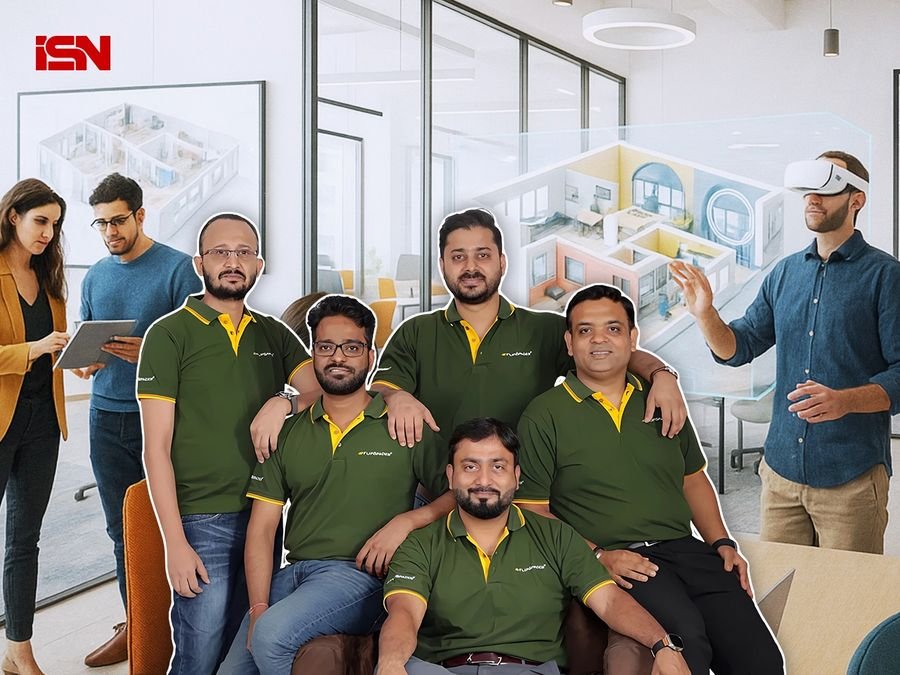
Rs 300 crore and a blueprint: what Flipspaces' funding round tells office interior firms everywhere
A commercial fit-out startup just raised serious capital. The real story is in the business model, not the cheque.
Nearly Rs 300 crore. That is the figure Flipspaces, an Indian office interior design startup, secured in its latest funding round — a number that would be unremarkable in Silicon Valley but signals something meaningful in a sector that has historically been fragmented, contractor-dependent, and resistant to standardization. Flipspaces operates by taking the chaos out of commercial fit-outs: it manages the full process from design through delivery for corporate clients, positioning itself as a tech-enabled, end-to-end operator rather than a traditional design studio.
The deeper insight here is not that a startup raised money. It is that institutional capital is now flowing into a business category — commercial interior fit-out — that investors once considered too project-based, too labor-intensive, and too geographically confined to scale. The Flipspaces round suggests that model is changing. When you systematize procurement, standardize material sourcing, and build repeatable project delivery workflows, what looks like a local contracting business starts to resemble a platform. That reframing is what attracted the capital.
For anyone running or considering a commercial fit-out operation in Moldova, the most instructive lens here is distribution — specifically, how a business like this actually reaches its clients and closes work. Flipspaces built its pipeline through direct corporate relationships, targeting companies relocating, expanding, or refurbishing office space. In Moldova, the equivalent client base sits inside a defined universe: international organizations with local offices, EU-funded project implementers, growing technology firms, and private medical or professional services practices investing in premises. These are not walk-in clients. They are reached through procurement cycles, referral networks, and occasionally through tender processes — which means the distribution model for a fit-out business here is relationship-first, not advertising-first.
The Flipspaces model also relies on controlling the supply chain — owning or closely managing material procurement, subcontractor selection, and project timelines. In Moldova, that supply chain runs heavily through import. Most specification-grade materials — commercial flooring, acoustic systems, branded furniture lines — arrive from Romania, Turkey, or further afield. A local fit-out operator competing at the corporate level cannot rely on spot purchasing; margin integrity depends on having reliable import channels and enough volume to negotiate terms. The operators who have solved this problem quietly command the better-margin projects. Those who have not are effectively bidding on price alone, which is a structurally weak position in any market.
Those dynamics raise a set of questions worth sitting with. Does your current pipeline come from relationships you have built deliberately, or from whoever called last? Have you mapped the procurement cycles of the institutional clients in your city who actually budget for fit-out work? And is your material sourcing structured well enough to protect margin when a project runs long or specifications change mid-build?
The Flipspaces raise is ultimately a reminder that fit-out businesses which operate like contractors stay priced like contractors. Most operators in this space in smaller markets default to project-by-project bidding, treating each engagement as standalone. The ones who grow past that ceiling tend to restructure around client retention and supply chain control — treating the business less like construction and more like a managed service.
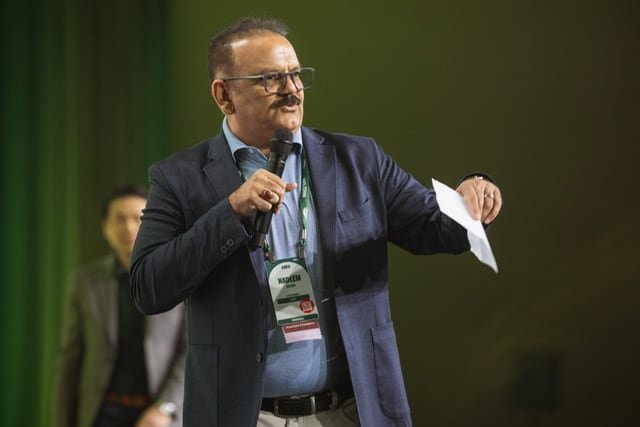
From $4.25 an hour to 270 restaurants: what this pizza empire says about franchise economics in Moldova
The real lesson from one immigrant's journey isn't inspiration — it's capital structure.
In 1991, a man arrived in the United States and took a job delivering pizza for $4.25 an hour. Today, he owns more than 270 pizza restaurants. That arc — immigrant laborer to multi-unit franchise operator — is the kind of story that gets told as motivation. But strip away the narrative and what remains is a precise case study in how franchise systems accumulate value over decades, and why the unit economics of pizza, specifically, make it one of the most replicated business models in the world.
Pizza franchising works because the model is engineered for replication. Standardized recipes, centralized supply chains, recognizable branding, and a delivery infrastructure that scales with population density — these are not accidents. They are deliberate design choices that reduce the cognitive and operational load on each individual operator, allowing someone who started at $4.25 an hour to eventually manage hundreds of locations without reinventing the wheel at each one. The franchisor absorbs the R&D, the marketing, and the brand risk. The franchisee provides capital and execution. It is a clean division of labor that has proven extraordinarily durable.
The deeper insight, though, is not about pizza at all. It is about what happens when a low-margin, high-volume food service model meets a disciplined operator with a long time horizon. The 270-restaurant outcome was not built on inspiration — it was built on compounding: reinvesting returns, opening additional units, and leveraging brand infrastructure that was already paid for by someone else.
For anyone operating in Moldova's food service sector, the franchise arithmetic looks very different — and the difference starts with scale. A pizza restaurant concept built for a market of hundreds of millions runs on supply chain assumptions that simply do not transfer directly: bulk ingredient procurement at national scale, centralized dough production, refrigerated logistics networks, and franchise support teams that justify their overhead only above a certain unit count. In Moldova, an operator building a pizza-focused format — whether branded or independent — is essentially constructing that infrastructure from scratch, or working around its absence.
The distribution reality sharpens this further. Delivery-dependent food formats in Moldova rely on a last-mile infrastructure — aggregator platforms, in-house riders, and urban density — that functions adequately in Chisinau but degrades significantly outside it. A 270-unit footprint is inconceivable at Moldova's geographic scale, which means the compounding logic that drove this story cannot simply be imported. What can be examined, however, is the unit-level margin discipline that made each individual restaurant viable before the next one was opened. That discipline — cost per ingredient, labor as a percentage of revenue, delivery radius as a constraint on ticket volume — is exactly where operators in this market tend to lose money quietly, long before they consider a second location.
Moldova's EU candidate status introduces one structural shift worth watching for food service operators specifically: as harmonization of food safety and labeling standards accelerates, the cost of compliance for any restaurant format with packaged or semi-processed inputs will rise. Operators who have built menus around locally sourced, minimally processed ingredients will face less regulatory friction than those who rely on imported sauces, frozen bases, or branded supplier inputs that may require re-certification under EU norms.
Before scaling any food service concept here, there are questions worth sitting with. Does your current single-unit operation generate enough margin to fund a second location without external debt — or are you assuming the second unit will fix the first one's economics? Have you mapped your actual cost per delivery against your average ticket size, or are you pricing from a sense of what the market will bear? And if your concept depends on a centralized supply input — a specific flour, a sauce, a packaging format — do you have a domestic alternative that survives a border disruption?
Most food service operators in this market open a second location when the first one feels busy, treating occupancy as a proxy for profitability. The operators who build something durable tend to run the unit economics cold before they sign the second lease — not because they are more cautious, but because they have already done it once and know exactly where the margin goes.