
From 7 outlets to 90: What a $2 million Japanese dining bet tells Moldovan F&B operators
A niche cuisine, a scalable format, and a funding round — the real lesson is about what comes before the money.
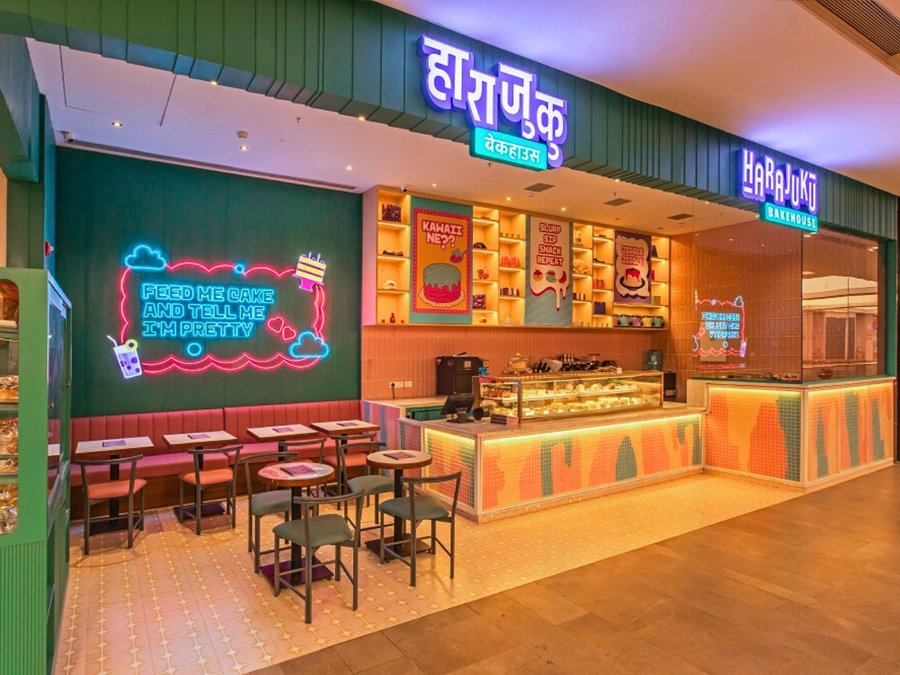
Harajuku Tokyo Café, an Indian Japanese casual dining and QSR chain, just closed its first institutional funding round at $2 million — raised against a claimed annual recurring revenue of Rs 30 crore and a network of just seven operational outlets. The round was led by Indian Angel Network, with participation from Samved VC, LetsVenture, and venture debt fund Capitar Ventures. The capital is earmarked for an aggressive push toward 90 outlets across 20 Indian cities, with a revenue target of Rs 200 crore by 2027. Letters of Intent are already signed for 15 locations across Delhi NCR, Mumbai, Ludhiana, and Chandigarh.
Founded in 2021 by Gaurav Kanwar, Harajuku Tokyo Café built its model around making Japanese cuisine accessible — not just affordable, but culturally legible — to a mass Indian market. The format pairs conveyor belt sushi and jiggly pancakes with manga libraries and robot DJs, while collaborating with Japanese chefs Asami Indo and Nariaki Higuchi to preserve authenticity. The brand also runs a parallel quick-service format, Harajuku Bakehouse, and is now extending into packaged foods through a D2C vertical called KoiKoi Essentials.
The instinct here is to read this as a story about exotic cuisine going mainstream. But the deeper signal is structural: Harajuku raised institutional capital at seven locations because it could demonstrate unit economics, a replicable format, and operational discipline — not because the concept was novel. Investors backed the system, not the idea. That distinction matters more than most founders want to admit.
For operators in Moldova's food and beverage sector — whether running a casual restaurant in Chisinau, a café chain testing a second location, or a catering business eyeing retail — this story lands differently. The Moldovan F&B market is not short on ambition or culinary talent. What it has historically lacked is the infrastructure thinking that turns a good first location into a scalable business: centralized kitchen operations, technology-assisted inventory, a loyalty mechanism that accumulates data. Harajuku's investors cited exactly these operational details as the basis for their confidence, not the aesthetics or the menu.
The questions worth sitting with are the ones that expose the gap between a successful outlet and a replicable business. Before a second or third location, what does your unit economics model actually say — not optimistically, but on a typical Tuesday? If a supplier fails or a head chef leaves, how exposed is your consistency? And is your current customer experience something you own and can reproduce, or is it largely dependent on individual people who could walk out the door? These are not rhetorical traps — they are the exact questions institutional capital asks before it moves, and they are worth asking of yourself long before a funding conversation begins.
If Harajuku's model at seven locations was compelling enough to attract $2 million, the arithmetic is worth reversing: what would your operation look like if you applied that same level of system-building to even two or three locations in the Moldovan market, where the competitive baseline in most F&B categories is still relatively low?
Most F&B operators in Moldova build the second location the same way they built the first — on relationships, intuition, and the hope that what worked once will work again. The alternative is to treat the first location as a prototype: document what drives margin, what breaks under pressure, and what the customer actually returns for — then build the second location against that evidence, not against optimism.
SourceSee also

400 stores, 12,000 jobs, one lesson: when a brand becomes pointless, no amount of discounting saves it
Wilko's collapse is not a story about retail economics — it's a story about what happens when a brand loses the ability to answer a simple question.
When Wilko entered administration in August 2023, it closed 400 stores and eliminated roughly 12,000 jobs — making it one of the largest retail failures in Britain since Debenhams. What makes the collapse instructive is not the scale of the loss, but the timing. The cost-of-living crisis should have been Wilko's moment. Cash-strapped British consumers were actively seeking out value retailers, and yet the brands that thrived — Aldi, Lidl, B&M, Primark — were not Wilko. The money was there to be captured. Wilko simply could not capture it.
The deeper story is not financial. YouGov data cited in reporting from The Drum showed that Wilko's brand perception scores had actually held up remarkably well heading into administration — its brand index sat at 28.4 against an industry average of 9.4, and its value-for-money scores were similarly above sector benchmarks. Consumers did not dislike Wilko. They just had no compelling reason to choose it. Rob Sellers, a retail consultant formerly of VCCP, put it plainly: if you gave 100 people 100 seconds to name something they would specifically go to Wilko for, you would get nearly 100 different answers. That diffusion is fatal at scale. It makes every marketing investment inefficient and, as Sellers argued, ultimately worthless. Tom Moore, UK head of commerce at VMLY&R, added that despite genuine affection for the brand, Wilko had failed to build a shopping experience that actually drew people in — neither frictionless and great value, nor distinctively inspiring.
For retail operators in Moldova, the Wilko story carries a precise and uncomfortable parallel. The local retail sector — from home goods and hardware to general merchandise — is still at a stage where most competing businesses look roughly alike from the outside. The product categories overlap. The price points cluster. The store layouts feel familiar. In that environment, it is tempting to believe that being present and affordable is enough of a strategy. Wilko believed the same thing for years, and it had 400 stores and decades of history behind it when that belief finally broke.
The questions that any retailer operating in this space should be asking are not abstract. Consider: if a customer in your city were asked in 100 seconds what they specifically come to your store for — what would their answer be, and would it match what you believe your brand stands for? Consider whether your current investment in customer experience — in-store layout, staff interaction, digital touchpoints — is designed to create a reason to return, or simply to avoid a reason to leave. And consider whether your marketing activity, however modest the budget, is building a recognizable identity over time, or producing tactical content that disappears into the feed without residue. Julie Oxberry, chief executive of the retail design agency Household, described Wilko's failure as a combination of poor decision-making, failure to adapt quickly, and losing sight of a once-strong core identity as an affordable retailer for hardworking families — a description that could apply to many retail businesses that have never interrogated what they actually stand for.
The broader pattern in markets like Moldova's is that the window for building brand clarity tends to stay open longer than it does in saturated Western retail environments — but it does not stay open indefinitely. When better-capitalized competitors arrive, or when the market simply matures, the businesses that have spent years accumulating a genuine identity have a meaningful head start over those that have spent the same years accumulating SKUs. Wilko had the loyalty. It lost the meaning. The question worth carrying is this: when the competition in your category sharpens, what is the one thing your customers would genuinely miss — and can you name it faster than they can?
Most operators in this space tend to default to price and proximity as their primary competitive levers, which works until it doesn't. A more deliberate approach looks like spending as much time defining what the business stands for as it does negotiating supplier terms.
Bed Bath & Beyond spent $11.8 billion destroying itself — and Moldovan retailers are making the same category mistake
When a market leader copies the wrong playbook, the collapse is always slower than expected and faster than anyone planned for.
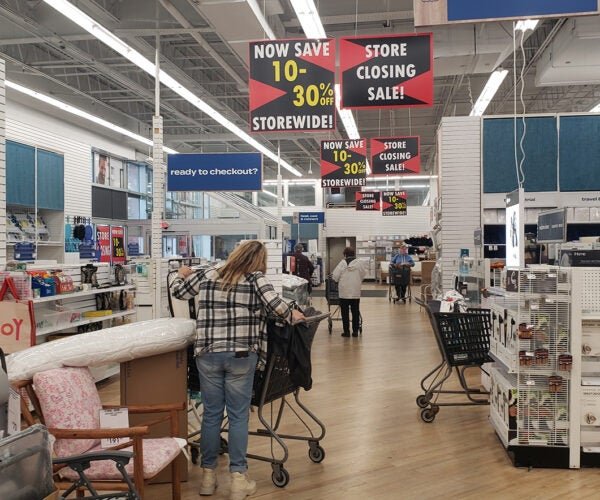
Bed Bath & Beyond spent $11.8 billion buying back its own shares between 2004 and its eventual bankruptcy filing in 2023 — a figure that dwarfs the $5.2 billion in debt reported in its final SEC filing. To put that in perspective: the company was borrowing money to repurchase stock even through a dismal 2022 holiday season, while its stores were emptying and its relevance was evaporating. The bankruptcy closed 360 retail locations and 120 Buy Buy Baby stores, ending a 52-year run as one of America's most recognized housewares retailers. The numbers are staggering, but they are symptoms, not the disease.
Wharton marketing professor Barbara Kahn, author of The Shopping Revolution, traces the real origin of the collapse to a strategic miscalculation that predates the debt spiral. By 2017 — what analysts had already labeled the retail apocalypse — category killers like Bed Bath & Beyond, Circuit City, and Toys R Us were being systematically undercut by e-commerce platforms that offered larger assortments at better prices. The concept of dominating a product category through sheer selection and competitive pricing, which had made these retailers powerful, was precisely what Amazon and its peers did better, faster, and at scale. Walmart and Target recognized this shift and invested in omnichannel strategies that used their physical store footprint as an asset rather than a liability. Bed Bath & Beyond did not.
But the more instructive failure came later, in 2019, when the company hired Mark Tritton — Target's chief merchandising officer — as CEO. Tritton did at Bed Bath & Beyond exactly what had worked brilliantly for him at Target: he replaced national brands with private-label products and reduced the company's dependence on coupons to drive traffic. At Target, this was smart margin management. At Bed Bath & Beyond, it was a misreading of the customer relationship. Shoppers came to Bed Bath & Beyond specifically for national brands they recognized and trusted. Without those brands, and without the coupons that had served as a reliable behavioral trigger to visit the store, foot traffic collapsed. The strategy that made one retailer successful did not transfer. As Kahn noted, the same pattern played out when Ron Johnson brought his Apple retail genius to J.C. Penney in 2011 — with results analysts described as disastrous.
For business owners in Moldova's retail and specialty goods sectors, this story is not about a giant falling. It is about the specific mechanisms of how category-based businesses lose their footing — and those mechanisms are not scale-dependent. A specialty home goods retailer in Chisinau, a network of electronics shops, or a regional furniture chain faces a structurally similar question: what actually brings your customer through the door, and are you protecting it or quietly dismantling it in the name of margin improvement? The Moldovan market is still in an earlier stage of retail category development, which means the same errors are available to make — just with less capital to absorb the consequences.
The questions worth sitting with are not abstract. Is your pricing or assortment strategy built around what your specific customer base values, or borrowed from a larger market where the customer relationship is fundamentally different? If you replaced your most visible customer incentive tomorrow — a loyalty program, a price guarantee, a signature product line — would traffic hold, or would it expose how thin the underlying loyalty actually is? And when you look at debt on your balance sheet, are you using it to build capability, or to paper over a model that has already stopped compounding?
The rhetorical question that Bed Bath & Beyond never honestly answered is the one every category retailer in any market eventually faces: at what point does optimizing for margin become indistinguishable from dismantling the reason customers chose you in the first place?
Most operators in this space tend to benchmark against whoever looks successful in a larger market and adapt those tactics with limited interrogation of why they worked there. A more grounded approach starts one step earlier — with a clear-eyed audit of what is actually driving customer return behavior before touching anything in the name of efficiency.
A $21 million bet on Indian EVs — and what Moldovan manufacturers should read between the lines
When Japanese deep-tech capital backs a Bengaluru motorcycle startup, the signal is bigger than the check.
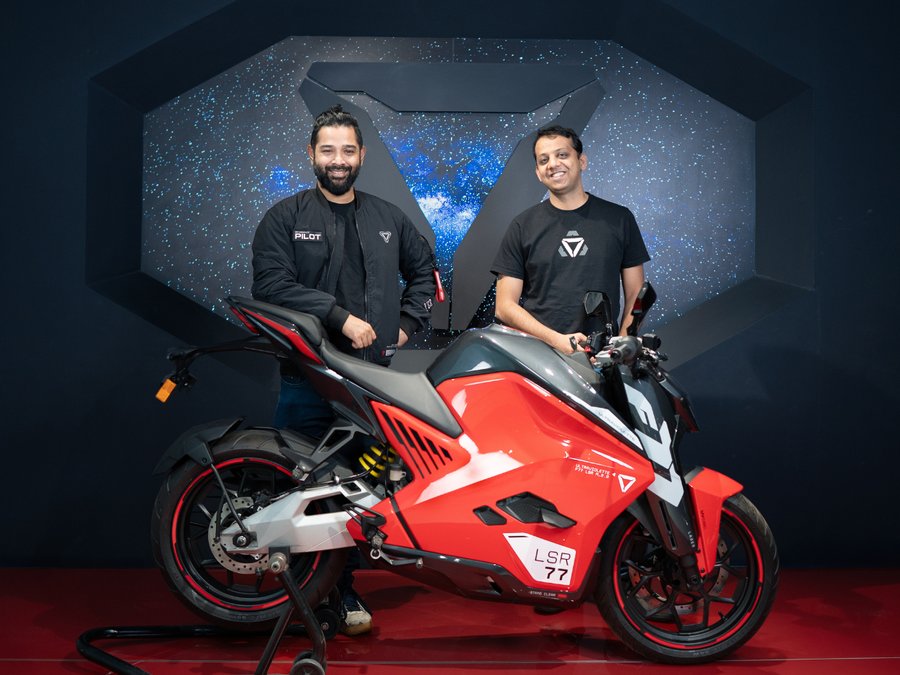
Twenty-one million dollars just crossed from Japan to India, landing in the accounts of Ultraviolette, a Bengaluru-based electric two-wheeler maker that most Western investors would have struggled to place on a map five years ago. The round was led by TDK Ventures — the corporate venture capital arm of TDK Corporation — with participation from Zoho Corporation and Lingotto, formerly known as Exor Capital. The company is also backed by TVS Motor Company, Qualcomm Ventures, and a roster of notable individual investors including Sriharsha Majety, co-founder and CEO of Swiggy, and actor Dulquer Salmaan. This is not a story about a startup getting lucky. It is a story about what happens when a manufacturer builds something genuinely exportable.
Ultraviolette's F77 became the first Indian electric two-wheeler to receive European certification and is now sold across 10 countries in Europe. The company is simultaneously scaling from 20 cities to over 100 cities within India, accelerating manufacturing, and pushing its product portfolio into global markets. TDK Ventures had already signaled its confidence in the Indian ecosystem in late 2023, when it launched a Bengaluru Innovation Hub specifically to help deep-tech startups scale globally. The $21 million round is, in that sense, a continuation of a thesis — not an experiment. The deeper insight here is not that EVs are hot. It is that regional manufacturers who build to global certification standards, rather than local convenience standards, are the ones attracting serious cross-border capital.
This dynamic is worth examining closely in Moldova, particularly for operators in light manufacturing, agri-tech hardware, and industrial equipment — sectors where the product exists but export readiness is often treated as a future problem rather than a design requirement. The Moldovan market is small enough that any manufacturer with genuine ambition eventually faces the same inflection point Ultraviolette faced: build for local scale, or build for global relevance from the start. The companies that reach that crossroads unprepared tend to spend years retrofitting their products, their documentation, and their compliance frameworks to meet standards they could have engineered in from the beginning.
The Ultraviolette story raises a set of questions that any product-based business owner in Moldova should sit with. Is your product currently built to the certification standard of your most ambitious target market — or to the minimum standard your current customers accept? If a corporate venture arm from Japan or Germany looked at your manufacturing process today, what would the due diligence conversation actually sound like? And are the investors or partners you are currently speaking with pushing you toward global standards, or quietly enabling you to stay comfortable at local scale? These are not rhetorical challenges — they are the exact fault lines where companies either compound their value or quietly plateau.
The question worth carrying past this article is this: if a motorcycle startup from Bengaluru can get European certification and close a Japanese institutional round, what is the real reason your product has not been submitted for its first international compliance review?
Most operators in Moldova's manufacturing and hardware sectors treat export certification as a milestone to pursue after achieving domestic stability — a reasonable instinct in a capital-constrained environment. The pattern that tends to produce different outcomes is building certification requirements into the product architecture at the design stage, treating compliance as a feature rather than a finishing step.

The $1.7 billion convenience play: What Australia's ready meal boom tells Moldovan food businesses
When time becomes the scarcest resource, the food industry that adapts fastest wins.
Analyst IBISWORLD forecast that revenue from Australia's prepared meals production industry will increase annually by 1.3 per cent over the next five years, reaching $1.7 billion — a number driven not by changing tastes, but by a single disappearing resource: time. Coles reported that sales of what it calls "convenient food solutions" increased by 50 per cent over the past three years, while a survey commissioned by the supermarket found that nearly eight out of 10 shoppers decide what they are going to eat within a day of consumption. Woolworths recorded double-digit growth in prepared meal sales. HelloFresh, which merged with ready meal brand Youfoodz in 2021, published research finding that more than four out of 10 Australians were having dinner between 7pm and 10pm each day.
The instinct is to read this as a story about busy people cutting corners. That misses the actual shift. University of Wollongong food historian Lauren Samuelsson noted that the category first took off in Australia in the 1970s as more women entered the workforce — a structural change, not a lifestyle trend. What is happening now is the second wave: Millennials and Generation Z working long hours, living alone, and demanding that convenience not come at the cost of nutritional quality. The product category has responded. Today's ready meal market spans low-calorie, high-protein, vegan, gluten-free, and keto options. The growth is not in junk food — it is in functional, portion-controlled, health-oriented convenience.
This trajectory maps cleanly onto the Moldovan food retail and food service sector. The structural conditions that drove Australian growth — urbanisation, longer working hours, smaller households, rising nutritional awareness — are not uniquely Australian. Local supermarket chains, prepared food counters at petrol stations, and any business sitting between raw ingredients and a working person's dinner table should be paying close attention to the mechanics of this shift, not just the headline numbers.
The questions worth asking are not abstract. If you operate in food retail, food production, or food service in Moldova, the relevant professional mirror looks like this: Is your prepared or semi-prepared offering designed around the customer's time constraint, or around your production convenience? Are you tracking whether the gap between what you currently stock and what a health-conscious, time-pressed urban buyer actually wants is growing or shrinking? And if a competitor entered your segment tomorrow with a cleaner label, better portioning, and a consistent price — would your current offer hold?
HelloFresh CEO Tom Rutledge made a point that carries well beyond Australia's cost-of-living context: the category that wins is not the one that strips out all pleasure in the name of utility. "Though people are being more careful with how they spend their money, you don't want everything to become completely utilitarian and joyless," he said. That tension — between functional and enjoyable — is exactly where the margin lives in prepared food. The businesses that understand this distinction will set the price; the ones that don't will compete on cost alone. In a small market like Moldova's, where the prepared meal segment is still forming its vocabulary, that positioning decision is still available. How long that window stays open is the question worth carrying.
Most operators in this space treat prepared food as a secondary line — something added to fill shelf space rather than built around a defined buyer. The more deliberate path is to treat it as a category in its own right, with its own margin logic, its own repeat-purchase dynamic, and its own signal about where the market is heading.

How a $50 toothbrush cracked Walmart — and what Moldova's consumer goods sector can learn from it
Ordo's entry into a $37.8 billion market dominated by two brands is a masterclass in positioning, not disruption.
The global oral care market is valued at $37.8 billion, and two companies — Oral-B, owned by Procter & Gamble, and Philips — reportedly hold 51% and 23% of the U.S. electric toothbrush market respectively. Those are numbers that should have made any new entrant walk away. Barty Walsh, Founder and CEO of Ordo, did not walk away. Instead, he launched a U.K.-based oral care brand in 2019 that has since delivered 250% year-over-year growth and, as of late 2024, placed its products on Walmart shelves in the U.S. — a market Statista values at $10.3 billion.
The reflex reading of this story is that Ordo succeeded because of design and affordability: its most expensive Sonic Lite item retails at $50, delivering results Walsh claims are comparable to competitor products priced at $150 to $200. That is true, but it is the surface layer. The deeper mechanism was sequencing. Walsh did not begin with retailers. He began with dentists, building professional credibility in U.K. dental clinics before approaching a single shelf buyer. When he did approach buyers — famously walking into Boots, a U.K. health and beauty chain, without a confirmed meeting and asking if the buyer was free — he arrived with a story already validated by the people consumers trust most about their teeth. Boots became Ordo's first major retail partner, though Walsh has noted it took years.
This is where the global story becomes locally relevant — not as inspiration, but as a structural observation. Moldova's consumer goods sector, particularly in personal care and health-adjacent products, operates in a market where shelf space in retail chains is limited and dominated by established international brands. A local producer or importer entering this space faces a version of the same arithmetic Ordo faced: two or three dominant players, a consumer who defaults to what is familiar, and a buyer who needs a reason to take a risk on something new. The parallel is not perfect, but the logic holds.
The mechanism Ordo used — professional validation before retail entry — is replicable in categories where experts carry purchasing authority. Consider what it would mean for a business selling, say, oral hygiene products, nutritional supplements, or even household cleaning goods through professional channels first: pharmacists, nutritionists, family doctors. In a market where advertising budgets are constrained and consumer awareness is still being built, a recommendation from a trusted professional compresses the trust-building timeline that would otherwise take years of marketing spend. Ordo also used a licensed partnership with the Squishmallows toy brand to enter the kids' oral care segment — gaining shelf credibility because retailers already had an existing relationship with that brand. The principle translates: associating with something the buyer already trusts is faster than building trust from scratch.
For a business owner in Moldova operating in any category where a professional class stands between the product and the end consumer, the Ordo playbook raises some precise questions worth sitting with. Are you treating the professional channel — the doctor, the pharmacist, the agronomist, the architect — as a distribution asset, or only as an afterthought once retail negotiations stall? Is your product's price positioning communicating quality, or is it sitting in an uncomfortable middle ground where it is too expensive for the value-sensitive buyer and not premium enough for the aspirational one? And when you walk into a buyer's office, are you arriving with external validation, or are you still relying on the product to speak for itself?
Ordo's entry into the U.S. market, which Walsh described as "another beast due to its size and supply chain complexity," was not the beginning of the brand's story — it was the reward for years of methodical market-building across Australia, New Zealand, South Africa, the UAE, and Europe, starting in 2023. The company did not attempt the hardest market first. It built the proof points in more accessible ones and used that momentum to earn the right to a harder conversation. That sequencing — choosing where to win before choosing where to grow — is a discipline that applies regardless of whether your market has 3 million people or 300 million.
The question worth carrying is this: if the two dominant players in your category hold a combined 74% market share, is the remaining 26% a ceiling — or the entire playing field?
Most operators in Moldova's consumer goods space approach retail buyers with the product first and the market story second, which places the entire burden of persuasion on a single meeting. A more deliberate path runs in the opposite direction — building the professional or community validation layer before the retail conversation begins, so that by the time a buyer asks why this product deserves shelf space, the answer is already standing in the room.

6.6 million impressions and a Fashion Week debut: what Carter's pivot to Gen Z parents means for children's retail in Moldova
A 160-year-old brand is rewriting how children's apparel gets sold — and the logic applies far beyond North America.
Carter's generated 6.6 million social media impressions from a single event at New York Fashion Week in February — an event built around toddlers trying on spring styles and posing for selfies in a branded playroom. For a company with over $2.8 billion in annual sales and 1,000 stores in North America, that number is not a vanity metric. It is a signal that the entire logic of how children's clothing is marketed is being rebuilt from scratch.
The company — founded in 1865 by William Carter, who relocated from England to Massachusetts to open sewing mills — expects that by the end of next year roughly two-thirds of its customer base will be Gen Z parents. That shift is forcing a 160-year-old institution to move with the speed of a startup. Kendra Krugman, Senior Executive Vice President and Chief Creative and Growth Officer at Carter's, put it plainly: the next-gen consumer is changing so fast, and the company has to move quickly with her. What used to be a grandmother's recommendation is now a friend's Instagram story or an influencer's reel. The purchase decision hasn't changed — but every channel, every touchpoint, and every aesthetic expectation around it has.
The deeper insight here is not about social media. It is about customer lifecycle compression. Carter's typical customer — according to the company's most recent earnings report, a mother with two young children and an $80,000-plus income who shops for children's clothing six or more times a year — ages out of the brand almost as fast as her children outgrow their clothes. Carter's is not just adapting to Gen Z; it is adapting to a permanent condition of constant customer turnover. Style and value are not competing priorities in this model. They are the same lever.
For anyone operating in children's retail or adjacent categories in Moldova, this dynamic is worth sitting with. The local children's apparel market operates under different scale constraints, but the underlying customer behavior — parents making frequent, repeat purchases across a narrow window of years — is structurally identical. The question is whether local operators are treating that window as a loyalty opportunity or simply a transaction sequence. Before drawing any strategic conclusions, it is worth asking a few direct questions. Are the parents buying children's clothing in your market being reached at the moment they are forming brand preferences — before the baby shower, not after? Is the visual and stylistic language of your offering calibrated to what a 26-year-old mother finds credible, or to what her mother found reassuring? And when a customer ages out of your product range, is there any mechanism in place to convert that exit into a referral, a gift purchase, or a future re-entry point?
Carter's answer to the last question is deliberate: the company actively courts grandparents through rewards programs, recognizing that the gifting occasion — the baby shower, the birthday — is a separate acquisition channel running in parallel to the primary one. That kind of channel architecture requires no significant capital to replicate at a smaller scale. It requires only the clarity to see that a children's clothing business is also, structurally, a gifting business.
The rhetorical question worth carrying out of this piece is a simple one: if two-thirds of your future customers are already forming opinions about your brand before they have walked through your door, where exactly are you showing up for them?
Most operators in the children's apparel space in Moldova treat the purchase moment as the beginning of the customer relationship. Those who think in terms of lifecycle — mapping the full arc from pre-purchase awareness through repeat buying through the gifting channel — are building something that compounds rather than resets with every new cohort of parents.