

When a celebrity moment lasts 48 hours, the brands that win are the ones who were already ready to move.
Instagram briefly crashed the day Taylor Swift and Travis Kelce announced their engagement. Meta's own spokesperson acknowledged it: "Turns out Instagram needed to process this news, just like everyone else." Within hours, Krispy Kreme was offering free donuts, California Pizza Kitchen had launched 13 days of heart-shaped pizzas priced as "It's a Love Story Pizza," Carl's Jr. was running $1 onion rings with any $5-plus order, and Papa Johns was giving $13 in free pizza dough to rewards members named Taylor or Travis. Portillo's built an entire campaign around Swift lyric references and offered free onion rings to its Perks members. The promotions were clever, fast, and — more importantly — almost certainly prepared in advance.
That last point is the one worth sitting with. The obvious read on this story is that restaurants are good at riding cultural moments. The deeper read is that the brands who executed well on August 27, 2025 did not improvise. Krispy Kreme does not coordinate a two-hour free donut window on the same day an announcement drops without a playbook already drafted. California Pizza Kitchen does not design a 13-day promotional calendar, name a pizza, and push it to dine-in and takeout systems in real time. These campaigns were built on contingency — a prepared trigger waiting for the right cultural event to activate it.
For restaurant and food service operators in Moldova, the industry parallel is direct. The local dining market is still in a formative stage, where most promotional activity follows a familiar rhythm: seasonal menus, holiday discounts, occasional social media posts tied to internationally recognized dates. That cadence works, but it leaves significant reactive capacity on the table. Consider the questions that any operator running a café, a delivery kitchen, or a casual dining concept in Chisinau should be sitting with right now: Do you have even one pre-built promotional template — a visual, a mechanic, a discount structure — that can be activated within four hours of a trending cultural moment? When your city's social media conversation spikes around a local event, a sports result, or a viral story, is your brand positioned to enter that conversation with something real to offer, or only with a comment? And if a national or regional moment gave you 48 hours of elevated consumer attention, do you have a loyalty structure — even a basic one — that converts that attention into a repeat visit?
These are not questions about budget. Carl's Jr.'s onion ring promotion required no new product and no new infrastructure — it required a decision made fast. Panera Bread's most-shared moment from the entire news cycle was a photo of bread with the words "SHE SAID YEAST" — a piece of content that cost nothing to produce and was seen by millions. The question is not whether a Moldovan food business can afford to run reactive promotions. The question is whether the internal permission structure and the pre-prepared assets exist to move when the window opens.
Most operators in this space tend to treat promotions as scheduled events — planned weeks out, approved through multiple layers, launched on a fixed calendar. A more practiced approach looks different: a small library of adaptable assets, a clear internal decision threshold for when to activate them, and someone on the team with the authority to press publish without a two-day approval chain.
SourceSee also

Europe's most funded battery startup collapsed not from lack of money, but from refusing to learn before it led.
Northvolt raised $15 billion across 14 funding rounds, secured orders from Volkswagen, BMW, and Volvo, and had Goldman Sachs and BlackRock on its cap table. It filed for bankruptcy in November 2024. The company's founder, a former Tesla vice president, returned to Sweden in 2016 at exactly the right moment — when European governments were desperate to build a homegrown battery industry and capital was flowing freely toward anyone with a credible story. The story was credible. The execution was not.
The details that emerged after the collapse are instructive. Equipment sat idle in warehouses for years. A procurement officer visiting a Chinese supplier in 2018 was stunned to discover that Northvolt's battery manufacturing was still largely manual — this at a company already positioned as Europe's answer to CATL. When BMW came to inspect the factory, the production lines weren't ready. Tents were erected to signal urgency. When BMW left, the tents came down. The pattern repeated.
But this story is not about European manufacturing falling behind China. It's about what happens when access to capital substitutes for operational discipline — when a company learns to perform readiness rather than build it.
Moldovan pharmaceutical distributors, private medical clinics, and agricultural processing businesses know a version of this dynamic. Capital — whether from EU grant programs, development bank lending, or private investors entering the market — is arriving faster than the organizational capacity to absorb it. A refrigeration logistics operation that secures EU co-financing for a new facility still needs the process knowledge to run it. A private clinic that raises capital to expand to three locations still needs the management layer that makes three locations work differently from one. The money is necessary. It is not sufficient.
The Northvolt case also points to something more specific: the danger of hiring for credential rather than craft. Northvolt brought in PhD holders for roles that, in China, were filled by technicians with hands-on production experience. In Moldova, the equivalent pressure often runs the other direction — toward speed and improvisation over structured competence-building. Both are ways of avoiding the same problem.
If you are scaling a business in this market right now, three questions are worth sitting with:
Do you actually know how your core operation works at the process level, or do you know how to describe it well? Access to capital and the ability to present a compelling plan are not the same as operational mastery — and the gap usually shows up after the funding arrives.
When you bring in outside expertise — consultants, foreign partners, new hires — are they transferring knowledge or replacing it? Northvolt's foreign engineers eventually left, taking their institutional knowledge with them. Dependency that doesn't convert into internal capability is a liability dressed as a solution.
Is your growth plan sized for what your team can actually absorb, or for what investors want to hear? Northvolt's 150-gigawatt target by 2030 was a number built for a pitch deck. The factory in the Arctic was still debugging its first production line years later.
Northvolt had everything the textbook says a startup needs: the right founder, the right moment, the right backers, and an almost unlimited runway. It still failed. The question worth carrying: in your business, what is the thing you have been describing as ready that you have not yet actually built?
Resilience is not a mindset. It is a set of specific decisions made under pressure.
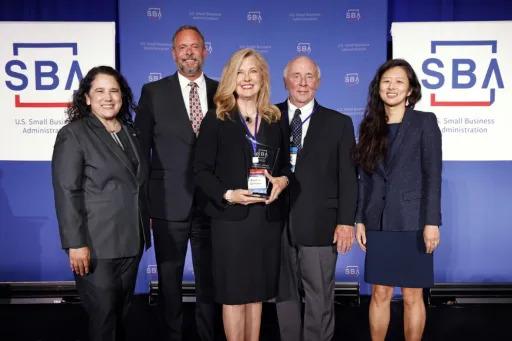
Transformation Partners LLC grew from three employees to fourteen, hit $525,000 in mid-year revenue, and recorded a 63% increase in new client engagements — all within three years of nearly shutting down during the COVID-19 pandemic. The Alabama-based consulting firm survived by doing something counterintuitive: it discounted its services and offered free advisory support at the exact moment cash flow was most at risk. It then secured a major Department of Defense contract in 2023, anchoring its recovery in institutional clients rather than retail demand.
The standard reading of this story is about resilience. A firm hits a wall, survives, wins an award. But this story is not about surviving adversity. It is about how giving away value at the right moment is a deliberate growth strategy — and how access to the right institutional networks determines which small firms scale and which stay small.
For Moldovan professional services — training providers, HR consultancies, management advisory firms — this pattern is immediately recognizable. The local market for organizational development, leadership training, and workforce consulting is early-stage, which means the competition is not yet saturated and the pricing logic has not yet hardened. Firms operating in this space are often caught between undercharging to win clients and overextending to deliver. The Transformation Partners model suggests a third path: structured generosity as a client acquisition tool, combined with a deliberate move toward institutional or government contracts that create revenue stability.
If you operate in professional services in Moldova, three questions are worth sitting with:
Are you treating free or discounted work as a loss, or as a calculated entry point into relationships that take time to monetize? The firms that recovered fastest in this case were the ones that reframed giving as positioning, not charity.
Is your client base concentrated in private sector relationships that can evaporate quickly, or do you have any institutional anchors — public sector, international organizations, donor-funded programs — that provide revenue continuity? In a small market, one large contract can redefine your firm's trajectory entirely.
Do you have access to the kind of network that surfaces non-public contract opportunities? In Moldova, as in Alabama, the difference between a firm that stays at three people and one that reaches fourteen is rarely talent — it is information access and the relationships that carry it.
The market for professional development in Moldova is not behind — it is open. The real question is who builds the institutional relationships first.

The real lesson from Liam Fuller's pre-seed round isn't about age. It's about who opens the door.
A 17-year-old with no university degree, suspended from school over a viral photo, cold-called venture capital firms in a country he was visiting on holiday — and walked away with A$2.15 million. Liam Fuller's pre-seed round, led by Square Peg Capital, closed around his 18th birthday. The round was for QuickFind AI, an agentic ordering system targeting retail procurement. The story moved fast across startup media precisely because it compressed everything the ecosystem claims to value — boldness, product clarity, timing — into one improbable biography.
But the numbers are not the point. Fuller made a three-hour train journey for a 20-minute meeting. That meeting happened because he made the call in the first place. The second highlight from the same podcast series is high-performance coach Veronica Mason, who rebuilt her life after breaking her back at 23 and now works on what she calls the foundational question of mentorship: what are you actually looking for in the person you let guide you.
This story is not about a teenage prodigy. It is about the structural gap between people who have access to honest, high-quality mentorship and those who do not — and what happens when someone simply decides to close that gap themselves.
In Moldova, private medical practices, agricultural exporters, and logistics operators are sitting on exactly this gap. The mentorship infrastructure that exists in mature startup ecosystems — accelerators with genuine network access, coaches who have operated at scale, investors who give feedback before they write a check — is still forming here. That is not a deficit. It is an open lane.
For anyone building in this environment, the real test comes down to three things:
Who in your network has actually done the thing you are trying to do — not just advised others to do it? Proximity to lived experience is worth more than proximity to credentials, especially in a market where formal business education often lags behind actual market conditions.
Are you mistaking access for mentorship? Knowing someone who knows someone is not the same as having a structured relationship where honest feedback flows in both directions. The distinction matters when you are making irreversible decisions.
What would you do differently if you assumed the right room was reachable — you just had not made the call yet? Fuller's move was not genius. It was a decision to treat rejection as a sequence, not a verdict.
Moldova's market is small enough that reputation travels fast and personal relationships carry real weight — which means the ceiling on what one quality mentor relationship can unlock is higher here than in markets where everyone is anonymous. The question is not whether mentorship matters. It is: whose number do you not yet have, and what is stopping you from finding it?

The skill that built one woman's first million is the same skill most businesses leave unused every day.
Rose Han paid off $100,000 in student debt and reached her first million by 32 — not through a windfall or a unicorn startup, but by treating almost every recurring cost as an opening position rather than a final price. Her core argument is structural: companies build pricing cushions expecting a percentage of customers to negotiate. The ones who never ask simply subsidize the ones who do. The two techniques she relies on are anchoring — naming your price first, supported by research, so the entire conversation orbits your number — and framing, which means presenting your request in terms of what the other party gains: retention of a reliable customer, reduced churn, a long-term relationship worth more than a one-time margin.
What makes this more than personal finance advice is the underlying logic. Pricing in most service categories is not cost-plus math. It is expectation management. Businesses charge what the market will tolerate without complaint. The moment a counterpart introduces friction — politely, with evidence — the calculus shifts. Han's data point is simple: the same company, the same product, a different representative on a different day, can produce a completely different outcome. Persistence, not leverage, is the variable.
But this story is not about saving money on a phone bill. It is about the systematic assumption that the price you are quoted is the price that exists — and how much value that assumption quietly transfers from buyers to sellers every single month.
In Moldova, this dynamic plays out with particular force in categories where pricing is opaque and switching costs feel high: logistics contracts, commercial lease renewals, supplier agreements in retail and food service, and service retainers in professional sectors. The negotiation is often available — it is simply not initiated. A business that has been a reliable client for three or four years carries genuine retention value to a supplier, and in a market this small, where reputations travel fast and client relationships are long, that value is frequently larger than in more anonymous markets.
For anyone managing recurring costs across a supply chain or service portfolio, the real test comes down to three things:
Have you benchmarked your current supplier or service rates against available alternatives in the last twelve months? Without a credible anchor number, any negotiation defaults to the other party's frame — and you are negotiating against yourself.
When you last renewed a contract or extended a service agreement, did you open the conversation or respond to one? The party that sets the first number in a renewal rarely pays more than the party that waits.
Do the people in your business who handle procurement understand that polite persistence — escalating to a decision-maker if needed — is a professional skill, not an uncomfortable confrontation? In markets built on personal relationships, the reluctance to push back on price is often social, not strategic.
In a capital-constrained market, cost reduction compounds the same way revenue growth does — but with less risk. The question worth carrying: how much margin have you quietly handed over this year simply by accepting the first number you were given?

Climate is now a product category — and fast-moving accessories are showing which markets are paying attention.
The global personal fan market is on track to surpass $1 billion by 2033, nearly doubling its current value. In the U.K. alone, consumers purchased 7 million portable mini fans in the past year. The Shenzhen-based manufacturer JisuLife has moved 30 million units since 2018. These are not numbers from a legacy appliance category — they are numbers from a product that costs less than a coffee and became a fashion item because summers got hotter and TikTok got faster.
The mechanism is worth understanding. Long common across humid Asian markets, the portable fan entered the West through two doors simultaneously: climate anxiety and the fast-fashion logic of cheap, disposable accessories. Temu and Shein list fans for as little as $4. Gen Z buyers, already conditioned to treat accessories as consumable, adopted them without friction. The product did not change. The context around it did.
But this story is not about fans. It is about how climate conditions are becoming product category triggers — and how the brands and retailers who read those triggers first capture a market before it becomes obvious.
For seasonal retail in Moldova — pharmacies stocking summer wellness products, market vendors, supermarket chains expanding non-food aisles, or small electronics importers — this pattern is not distant. Summers in Moldova are getting longer and more intense, and consumers here are increasingly exposed to the same social media currents that drove the trend globally. The infrastructure of fast discovery exists: Facebook, TikTok, and local marketplaces are all active. What is still underdeveloped is the supply-side response — the willingness to treat a $5 climate-comfort product as a legitimate seasonal SKU, merchandise it intentionally, and position it as something people want rather than something they might tolerate buying.
What is commodity in Berlin or Bucharest is still an early-mover opportunity in Chisinau. Word-of-mouth here travels fast in tight social networks, and a single visible placement — in a pharmacy near the register, in an outdoor market stall framed as a summer essential — can seed organic demand without significant ad spend.
If you operate in seasonal retail, consumer goods import, or any category adjacent to summer commerce, three questions are worth sitting with:
Are you treating climate discomfort as a product brief? The portable fan succeeded because someone read heat as an unmet need, not a weather forecast — the same logic applies to any seasonal discomfort category.
Is your buying cycle fast enough to catch a social trend before it peaks locally? The gap between a trend going viral globally and arriving in Moldova is shrinking — the retailers who shorten their own reaction time are the ones who capture margin.
Are you merchandising for impulse or for search? In a market where consumers trust what they see and what friends recommend, physical placement and visible context often outperform digital ads — especially for low-cost, high-curiosity items.
When the next heat wave arrives, who in your category will already have the shelf space ready?

The Hertz-Accenture collapse was not a budget problem. It was a delivery problem — and that distinction matters everywhere.
Hertz spent $32 million on a full digital overhaul and ended up with broken code, missed deadlines, and a lawsuit against one of the world's largest consultancies. A McKinsey and Oxford study of over 5,400 global IT projects found that 17% fail so badly they threaten the company's survival. Hertz, a billion-dollar brand with access to the best advisors money could buy, still ended up in that 17%. The project — contracted to Accenture in 2016 — missed deadline after deadline through 2017 and into 2018. When Hertz finally terminated the contract, the delivered code was incomplete, buggy, and contained serious security vulnerabilities. A lawsuit followed. Accenture denied wrongdoing. The $32 million was gone regardless.
The instinct is to read this as a cautionary tale about outsourcing, or about trusting large consultancies. But this story is not about vendor selection. It is about what happens when a company treats digital transformation as a procurement event rather than a governed, sprint-by-sprint delivery process — and never builds the internal visibility to catch problems before they compound.
For context: the Hertz project had no working testable output at key milestones, compliance and quality assurance were treated as downstream concerns, and leadership had no real-time view of what was being built. BCG estimates that nearly 70% of digital transformation failures trace back to poor risk management and execution breakdowns — not to the size of the budget or the reputation of the vendor.
Private medical clinics, agricultural exporters, and financial services operators in Moldova are now moving into territory that Western markets navigated a decade ago — building digital booking systems, payment integrations, client-facing platforms, and internal process automation. What is already commodity infrastructure in London or Warsaw is still a genuine competitive advantage in Chisinau, and that window will not stay open indefinitely. The question is not whether to build — it is whether the delivery model is structured to catch problems early rather than absorb them late.
Moldova's market has one structural advantage that large Western projects often lack: the feedback loop between owner, team, and customer is short. A business here can validate a feature, hear from actual users, and correct course inside a single month. That is not a constraint — it is leverage, but only if the development process is built to use it.
If you are currently running or commissioning a digital build — whether that is a payment system for a logistics operation, a client portal for a private clinic, or inventory automation for a retail chain — three questions are worth sitting with:
Are you receiving working, testable output at regular intervals, or are you being asked to wait for a final delivery? The Hertz project produced nothing demonstrably functional until it was too late to course-correct without catastrophic cost.
Is compliance — whether that is data protection, financial regulation, or sector-specific requirements — built into the development process from the start, or treated as a final step? Retrofitting compliance after a build is complete is consistently more expensive and more disruptive than integrating it from day one.
Does your leadership team have real-time visibility into what is being built, what is blocked, and what is at risk — or are you dependent on periodic reports from the vendor? Visibility is not a luxury feature of project management. It is the mechanism by which problems stay small.
Hertz lost $32 million and never got a working product. The delivery model was broken from the start, and no budget could fix that. The real question for any business investing in digital infrastructure today is this: when the first problem surfaces in your project — and it will — will you know about it in time to act, or after it has already become a failure?